
Tile fixing contractors in Dubai ensure durable tile installation by preparing the substrate, matching adhesive and grout to the tile, planning the layout, and inspecting the finished work before handover. A surface can look flawless on completion day and still fail months later.
Hollow-sounding tiles, uneven edges, cracked tiles, weak adhesive bonds and crumbling grout rarely appear by chance. Most trace back to avoidable decisions made before the first tile goes down. Experienced tile fixing contractors in Dubai reduce those risks through careful preparation, compatible materials, accurate fixing and final checks.
This guide explains each stage so you can judge tile work in Dubai with confidence, whether you own a villa, manage an apartment block or invest in rental property.
What Makes a Tile Installation Last Longer in Dubai Properties?
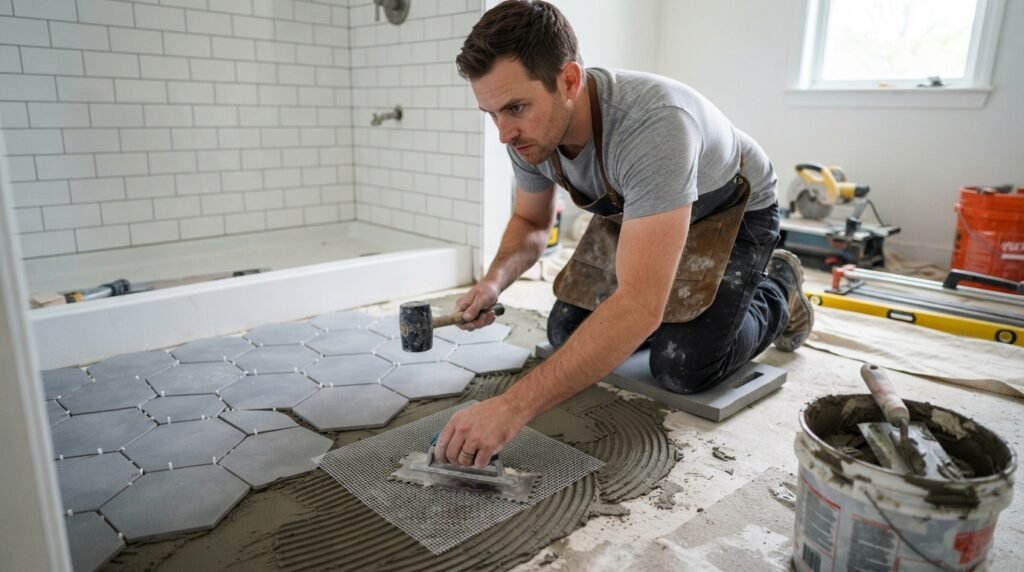
Durability depends on the whole system, not just the tile. A premium tile on a weak base fails sooner than a modest tile on a sound one. Reliable tile fixing contractors in Dubai assess these factors before they quote or start work:
- Substrate condition: The base must be stable, clean and suitably level.
- Adhesive and grout: Both must suit the tile, the surface and the space.
- Tile type, size and use: A balcony, a kitchen floor and a feature wall make different demands.
- Spacing, alignment and curing: Consistent joints and correct curing protect the bond.
- Movement joints: Installers add them where the conditions and product specifications require.
- Exposure: Temperature changes, moisture and daily foot traffic all test the installation.
Owners planning floor tiling Dubai projects should remember that the finished look reflects only the top layer. The layers beneath decide how long it lasts.
How Surface Preparation Prevents Tile Installation Failures
Preparation decides whether tiles stay bonded. Skilled tile fixing contractors in Dubai treat it as the most important stage, not an optional extra. They typically:
- Remove dust, grease, loose material and other contaminants.
- Check that the substrate is stable and sufficiently level.
- Look for cracks, moisture problems and weak patches.
- Repair surface defects before they apply adhesive.
- Confirm that the substrate suits the chosen installation system.
Tiling over an unsuitable surface invites debonding, cracks and uneven finishes. Adhesive cannot compensate for a dusty, crumbling or damp base. When a contractor rushes this stage, the owner usually pays for it later.
How Contractors Select Adhesives and Grout for Different Tiles
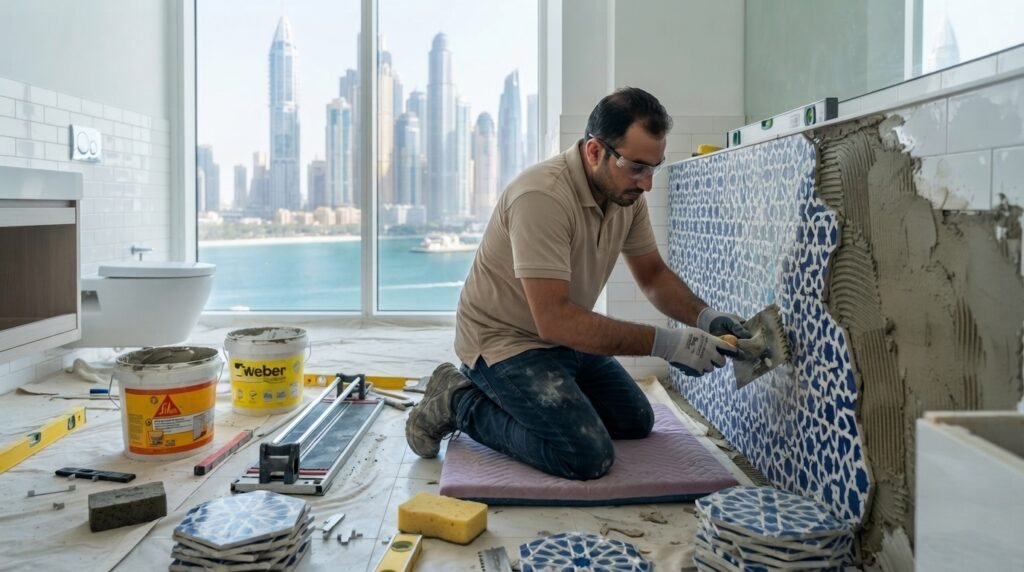
Installation materials must match the tile type, the substrate and the environment. Good tile work in Dubai begins with that match, not with whatever product is nearest to hand.
- Adhesive compatibility: The adhesive must suit both the tile and the surface beneath it.
- Large-format and low-absorption tiles: These need careful adhesive choice and application.
- Grout selection: Joint width and exposure conditions guide the choice.
- Water-resistant systems: Suitable wet areas call for products designed for them.
- Manufacturer instructions: Contractors follow them for mixing, application and curing.
No single adhesive or grout suits every tile or property. Responsible installers read the product data sheets first and then follow them on site.
Why Tile Layout and Spacing Matter More Than Appearance
Layout planning is a technical step, not just a design choice. Before they mix any adhesive, careful tile fixing contractors in Dubai mark out the area and:
- Measure the space and plan tile alignment.
- Avoid narrow, awkward cuts where practical.
- Keep grout joints consistent.
- Check level differences between neighbouring tiles.
- Plan transitions at doorways, corners and other floor finishes.
- Allow for movement joints where the system specifies them.
Ask to see the contractors’ tile layout plan before work begins. Good planning improves appearance and performance together, because even joints and level surfaces leave fewer edges to catch and chip.
How Different Tile Types Require Different Installation Methods
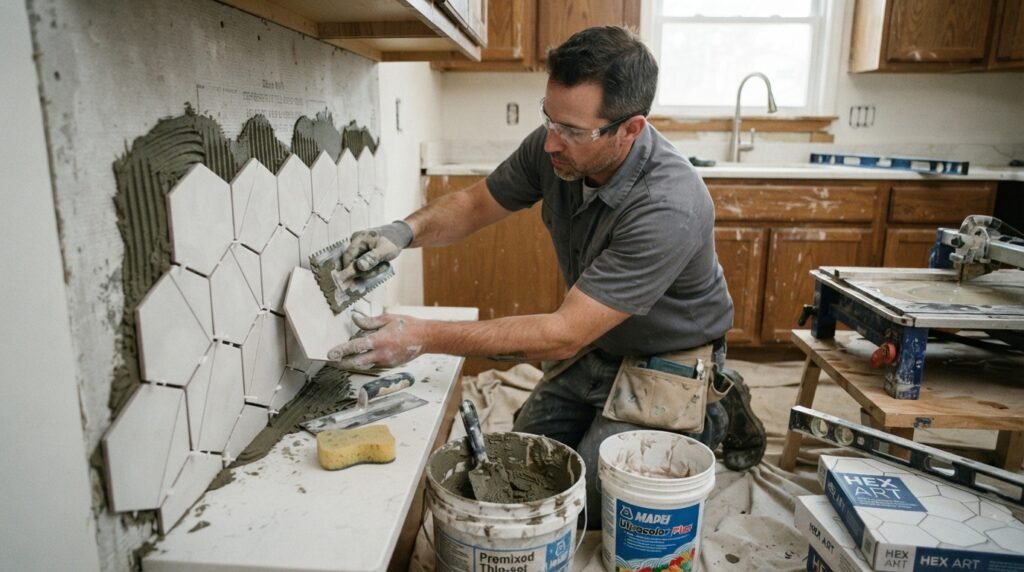
Ceramic, porcelain and other tiles behave differently, so installers adjust their methods for each one.
What Contractors Check Before Ceramic Tile Installation
Before ceramic tile installation, contractors check the tile’s absorption, the suitability of the surface, adhesive compatibility and correct spacing. Ceramic tile installation also depends on applying the adhesive exactly as the product requires.
Why Porcelain Tiles Need Careful Adhesive Selection
Porcelain absorbs very little water, so the adhesive has less surface to grip. Porcelain tile installation therefore demands an adhesive suited to both the tile and the substrate. Skilled tile fixing contractors in Dubai also confirm adhesive coverage against the manufacturer’s guidance. A poor adhesive choice can undermine porcelain tile installation even when the tile itself is excellent.
How Floor and Wall Tiles Differ in Installation
Horizontal and vertical surfaces carry different loads. Floor tile installation must resist foot traffic, so it needs solid support over a stable base. Wall tiles carry mainly their own weight, so wall tiling services focus on adhesive grip, slip control during fixing and alignment across a vertical plane. Both need correct preparation, but the details differ. A competent contractor treats floor tile installation and wall work as separate tasks with their own materials and methods.
How Dubai’s Indoor Conditions Affect Tile Durability
Climate is one consideration among several. Substrate movement, workmanship and material compatibility matter just as much. Experienced tile fixing contractors in Dubai weigh these conditions:
- Temperature differences: Indoor and outdoor spaces can sit at very different temperatures.
- Air conditioning: Indoor temperatures shift as cooling systems cycle on and off.
- Moisture: Bathrooms, kitchens and balconies face regular water exposure.
- Material suitability: Products must suit the space they serve.
- Movement joints: Installers include them where the design and product specifications call for them.
Heat alone does not crack tiles, and no single method suits every property. Balconies and entrances deserve extra thought in any floor tiling Dubai project. Careful tile fixing Dubai specialists respond to the actual conditions of each space.
Which Quality Checks Help Identify Poor Tile Workmanship?
Checks should happen during installation and before anyone uses the area. Professional tile fixing contractors in Dubai typically verify:
- Alignment and joint spacing: Lines run straight and joints stay consistent.
- Flatness and lippage: Adjoining tiles sit level with each other.
- Adhesive coverage: It suits the tile and the application.
- Soundness: A tapping sound helps, but sound alone cannot confirm bond quality.
- Grout: The mix looks consistent and every joint is complete.
- Curing time: The product specifications set the wait before grouting, loading or use.
- Details: Edges, transitions, drains and wet-area junctions receive close attention.
Owners reviewing tile fixing Dubai work can inspect the surface in good light and with a straight edge. Ask for the handover checks in writing.
What Early Warning Signs Suggest a Tile Installation May Fail?
Watch for these signs after installation:
- Tiles that move or become loose.
- Cracks that appear without an obvious impact.
- Hollow-sounding areas that repeat across the floor.
- Uneven tile edges or noticeable lippage.
- Grout that repeatedly cracks, crumbles or separates.
- Moisture damage around wet areas.
Each sign can have a different cause, so a professional should assess it. Replacing grout alone will not solve an underlying problem. Good tile repair services start by finding out why the defect formed, then correct that cause. Without that step, even well-executed tile repair services may only delay the next failure.
How to Evaluate Contractors Before Your Tile Project Begins
Ask these questions before you appoint anyone:
- What surface preparation does the work include?
- Which adhesive and grout system will you use, and why?
- How will you manage alignment, spacing and movement joints?
- What checks will you complete before handover?
- How will you handle wet-area detailing and transitions?
- What curing and maintenance instructions will you provide?
- Does the written scope state materials, preparation, installation and exclusions?
Clear answers show that a tile fixing company in dubai understands durability. Vague answers deserve follow-up questions. Compare each tile fixing company in dubai on the quality of its answers, not only on its quotation. Review the contractors’ tile specification for each option, and compare tile fixing contractors in Dubai on method as well as appearance. Ask the same questions when you commission wall tiling services for bathrooms and kitchens, because wall work needs its own preparation and checks.
Final Thoughts on Achieving Durable Tile Installation
Durable tiling rests on four things: a sound substrate, compatible materials, accurate fixing and honest quality checks. The best tile fixing contractors in Dubai combine all four and explain their decisions clearly. Good workmanship reduces avoidable defects, but it cannot eliminate every future problem.
When you choose tile fixing contractors in Dubai, judge the installation process, not only the quoted scope or the finished appearance.
Ready to start your tiling project? Speak to FixToday, ask about your property and get clear answers on preparation, materials and quality checks before work begins.
FAQs About Tile Fixing Contractors in Dubai
What causes newly installed tiles to become loose?
Loose tiles usually result from poor surface preparation, unsuitable adhesive, inadequate adhesive coverage or substrate movement. Moisture and rushed curing can also weaken the bond. Because causes vary, reputable tile-fixing contractors in Dubai assess the cause before they refix any tile.
How long should tile adhesive cure before the floor is used?
No universal period exists. Curing time depends on the adhesive, substrate, tile and site conditions. Follow the manufacturer’s data sheet, and ask your contractor which product they use and when the floor is ready for grouting and foot traffic.
Why do grout lines crack after tile installation?
Grout can crack because of substrate movement, missing movement joints, the wrong grout for the joint width, poor mixing or early loading. Repeated cracking often signals a deeper issue. Experienced tile fixing contractors in Dubai trace the cause before they regrout.
Can large-format porcelain tiles be installed on every surface?
No. Large, low-absorption tiles need a flat, stable, suitable substrate and a compatible adhesive and application method. Some surfaces need correction first, and some may not suit the tile at all. Ask your installer to confirm suitability against the manufacturer’s guidance before you order.
How can property owners check tile installation quality before handover?
Inspect the surface in good light. Check alignment, joint consistency, lippage, grout completion and the edges around transitions. Ask which checks the team completed and what curing instructions apply. A professional tile fixing company in dubai should welcome these questions.