
Exterior paint products are designed for different surface types, so choosing the right one matters. Smooth render, weathered timber, porous concrete and brick all have different surface characteristics that should be considered before painting.
Good exterior wall painting starts with understanding your wall surface and selecting the right paint type, finish and colour. The right combination helps protect your walls, improve their appearance and make maintenance easier. This guide explains suitable paint options for different exterior surfaces to help you plan your next home painting project.
Why Exterior Wall Material Matters When Choosing Paint
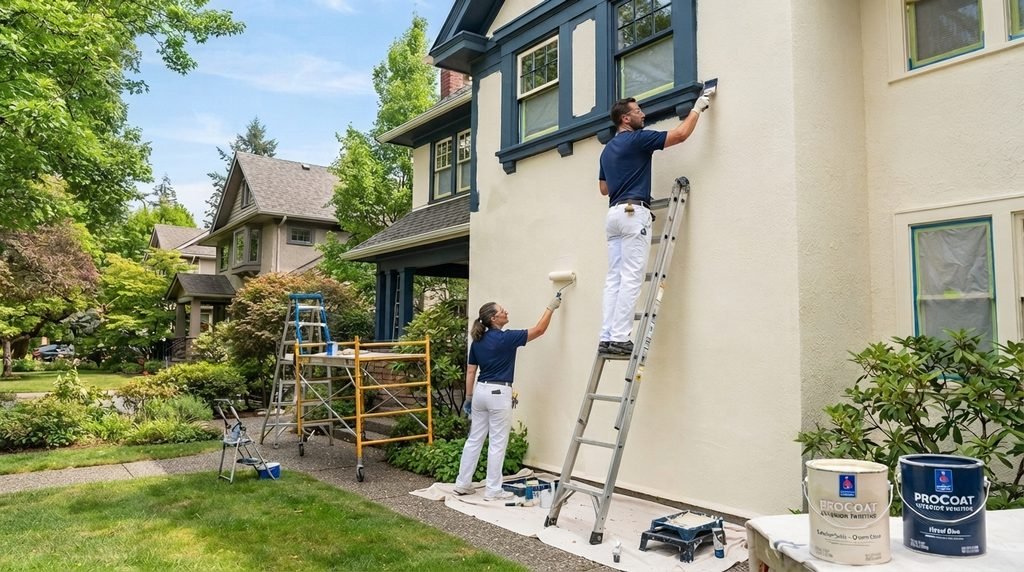
The same paint can behave very differently from one wall to the next. A dense, smooth surface keeps paint sitting on top, while a porous one draws it in and can leave an uneven look if the product isn’t suited to it.
Adhesion and moisture matter too. Brick and concrete absorb moisture, and timber swells with it, so a coating that can’t cope may crack or lift. A smooth wall, a rough wall, and a wall with old paint each need a different approach, so assess the surface before planning any exterior wall painting. Sound exterior wall painting begins with knowing what you’re actually painting.
Choosing Exterior Paint for Different Wall Surfaces
Each material has its own needs. Surface-specific exterior wall painting choices make a big difference to how the finished job holds up.
Exterior Paint for Timber and Weatherboard Walls
Exterior wall painting on timber needs flexibility because weatherboards expand, contract, and round moisture. Water-based acrylic coatings are common because they move with the boards. and let some moisture vapour escape. Bare or exposed timber usually needs a suitable primer first, so check the label.
When comparing the best exterior house paint for wood, read the technical data sheet rather than the front of the tin. Check that it suits your timber, the existing coating and how much sun the wall gets. Paint and stain are different routes. Paint forms a solid film that hides the grain and offers plenty of colour choice. Stain soaks in, shows the grain and tends to wear away gradually rather than peel.
Selecting Exterior Concrete Paint
Concrete is hard but porous, and it’s often alkaline, especially when new. Exterior concrete paint is formulated for those conditions. Standard wall paint isn’t, and it can bubble, flake or fade early.
For exterior esaaaabc wall painting, look at adhesion, durability, and how the product handles moisture. Many concrete wall coatings are acrylic masonry products that resist alkalinity and let the wall breathe. Check whether the concrete has been coated before, because an old sealer or chalky surface changes what will stick.
Paint Selection for Brick and Rendered Walls
Face brick is hard, with mortar joints that add texture. Render is a cement-based coating that can be smooth, rough or sponge-finished. Both are porous, so breathable masonry paint is the usual choice. Breathable means moisture vapour can pass through the coating. It doesn’t make a wall waterproof.
Texture shapes the result. A smooth render gives a clean look but shows any patching. Heavily textured render or rough brick creates small shadows that can make a colour look deeper. Painting brick is close to permanent because the original face is very hard to restore, so think carefully about exterior wall painting on feature brickwork.
Choosing Paint for Previously Painted Exterior Walls
Exterior wall painting over an existing coating or topography is what’s already on the wall. Oil-based and water-based paints don’t always get along, and some old coatings need a specific primer. Peeling means the old layer has lost its grip. Chalking, the powdery residue that rubs off on your hand, means the surface is breaking down. An unsuitable choice can lead to poor adhesion, patchy sheen or early flaking.
Understanding Different Exterior Paint Finishes
The sheen you buy for exterior wall painting shows how a wall looks and how it is dirty. Each exterior paint finish has a trade-off.
- Flat or matte: Minimal reflection, so it hides flaws well. It suits textured render and older walls but can be harder to clean.
- Low-sheen: A soft glow between matte and satin. It’s a popular all-rounder for main walls.
- Satin: More sheen and easier to wipe down, but it shows imperfections, so it suits smooth, well-kept walls.
- Semi-gloss: The shiniest option. It’s tough and washable, which suits trims, frames and doors, but it highlights every flaw.
No single finish suits every wall. Choose by surface and by how much cleaning you’re happy to do.
How to Choose Exterior Texture Paint and Designs
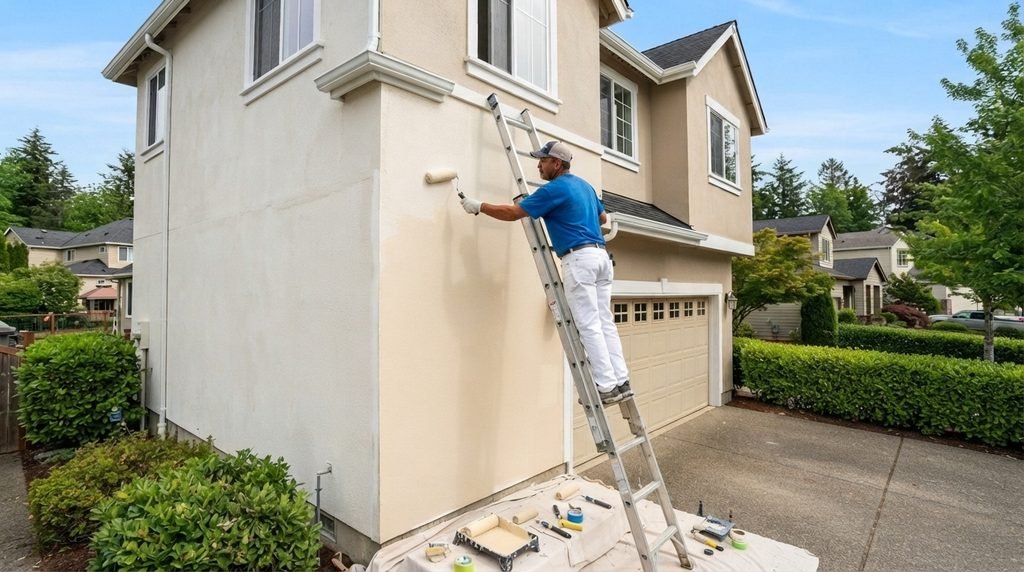
Exterior texture paint contains fine particles such as sand, so it dries with a slightly rough, tactile surface. It adds depth to a plain wall and softens minor surface variations. Common looks include fine sandy textures, stippled or roller finishes and heavier trowelled styles. Fine textures feel subtle and contemporary, while heavier ones feel rustic or Mediterranean.
Architecture should guide your exterior paint design. A Federation home often suits smooth or lightly textured walls that let the detailing stand out. A Californian bungalow can handle more texture. A clean-lined contemporary home usually works best with smooth walls and one feature wall.
Think about what the texture sits besides in your exterior wall painting scheme. It pairs well with smooth trims, timber cladding or stone, but too many competing textures look busy. A considered exterior paint design keeps the whole house feeling connected.
How to Select the Best Exterior Paint Colours
Start with the house itself. A period home usually suits traditional tones, while a modern build can carry bolder contrast. Wall colours should also sit comfortably with fixed elements such as the roof and paving.
Trims, doors, and windows give you room for contrast. A common approach is a lighter or darker trim against the main wall colour, with the front door as the accent. Light colours make a home feel larger and reflect heat. Dark colours look dramatic and hide dirt, but they fade faster and can stress timber.
- Neutrals: Warm whites and soft greys suit almost any style.
- Earthy tones: Sandy browns, olive and terracotta suit bungalows and bush settings.
- Contemporary combinations: Charcoal with white trim suits modern, angular homes.
When choosing the best exterior paint colours, remember that natural light can change how a colour looks throughout the day. A shade that appears warm in direct sunlight may look different in shaded areas. Apply large paint samples to your walls and check them in the morning, at midday and in the evening. Consider your home’s exterior design and surrounding colours before making a final decision. This helps ensure the chosen shade looks consistent and suits your property.
Important Factors to Consider Before Selecting Exterior Paint
- Surface and condition: Timber, concrete, brick and render need different products, and existing coatings matter.
- Compatibility and adhesion: Confirm the paint suits both the surface and anything already on it.
- Durability and maintenance: Think about how often you’re willing to clean or recoat.
- Sun and environment: Strong sun can fade colour, and coastal air can be harsh on coatings.
- Manufacturer recommendations: The data sheet shows what the product is designed for.
- Colour, finish and specifications: Make sure they suit the material and the look you want.
Keeping these in mind makes exterior wall painting decisions much easier.
When Should You Consider Professional Exterior House Painting Services?
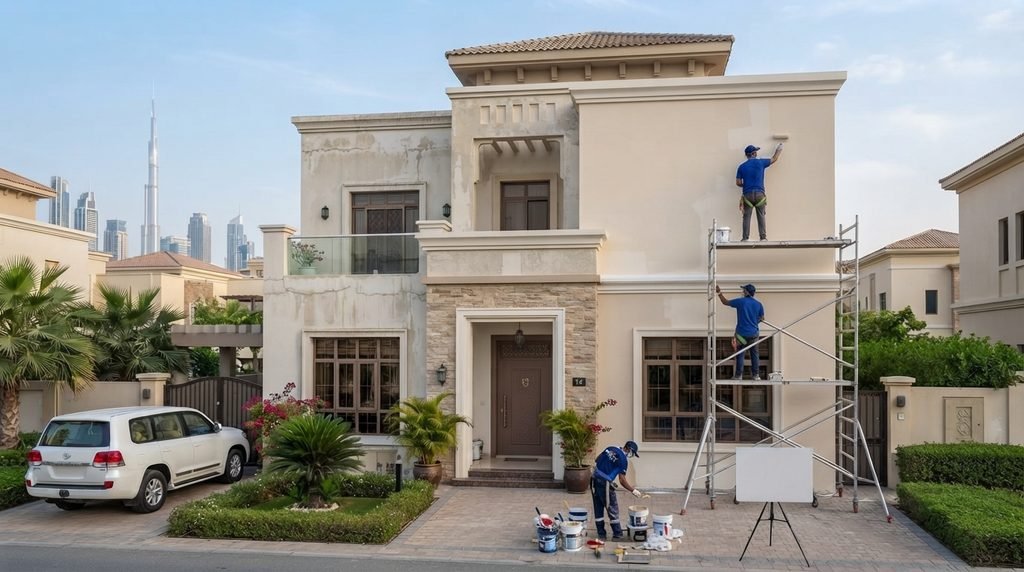
A house with several surfaces can complicate exterior wall painting choices. A weatherboard section, a rendered front and a concrete base might each need a different product. Professional exterior house painting services can simplify that.
An experienced painter can assess each material, suggest suitable paint systems and finishes, and explain whether products will work together. A written scope before work starts spells out what’s being painted and with which products.
If you’re searching for house painting on the exterior near me, look for a local team that inspects your walls and explains their recommendations plainly. FixToday provides exterior home painting for homeowners who want clear advice. You can read about a recent exterior house painting project, browse our residential painting services or see our commercial painting services.
Frequently Asked Questions About Exterior Wall Painting
Which paint is best for exterior wall painting?
It depends on the wall. Water-based acrylic suits most timber, masonry paint suits brick and render, and alkali-resistant acrylic suits concrete. Check the data sheet.
What type of paint is suitable for exterior concrete walls?
A masonry-grade acrylic made for exterior use. It should resist alkalinity, grip well and allow moisture vapour to pass through.
What is the best exterior house paint for wood?
A flexible, water-based acrylic made for exterior timber is a common pick. Follow the manufacturer’s limits for darker shades.
Is exterior texture paint suitable for all wall surfaces?
Not always. It suits render, brick and many masonry walls but may not suit every cladding or heavily weathered surface.
Which exterior paint finish is easiest to maintain?
Low-sheen and satin are generally easier to wipe clean than matte. Keep semi-gloss for trims and doors.
How do I choose the best exterior paint colors for my house?
Consider your home’s style, the roof and how light hits each wall. Test large samples at different times of day.
How to paint exterior walls with different surface materials?
Match the product to timber, concrete, brick or render separately. A painter can show you how to paint exterior walls where several materials meet.
When should I hire professional exterior house painting services?
When you have several surface types or want color and finish advice. A search for house painting on the exterior near me will turn up local teams who can inspect the walls first.
Final Thoughts
The right paint depends on the surface you’re working with. Timber, concrete, brick and render each require suitable paint products and finishes. Consider the surface condition, colour scheme and maintenance requirements before making your choice. With proper planning, exterior wall painting becomes easier to manage.
Need help planning your next painting project? Contact FixToday today to discuss your exterior painting requirements and explore suitable painting solutions for your property in Dubai.