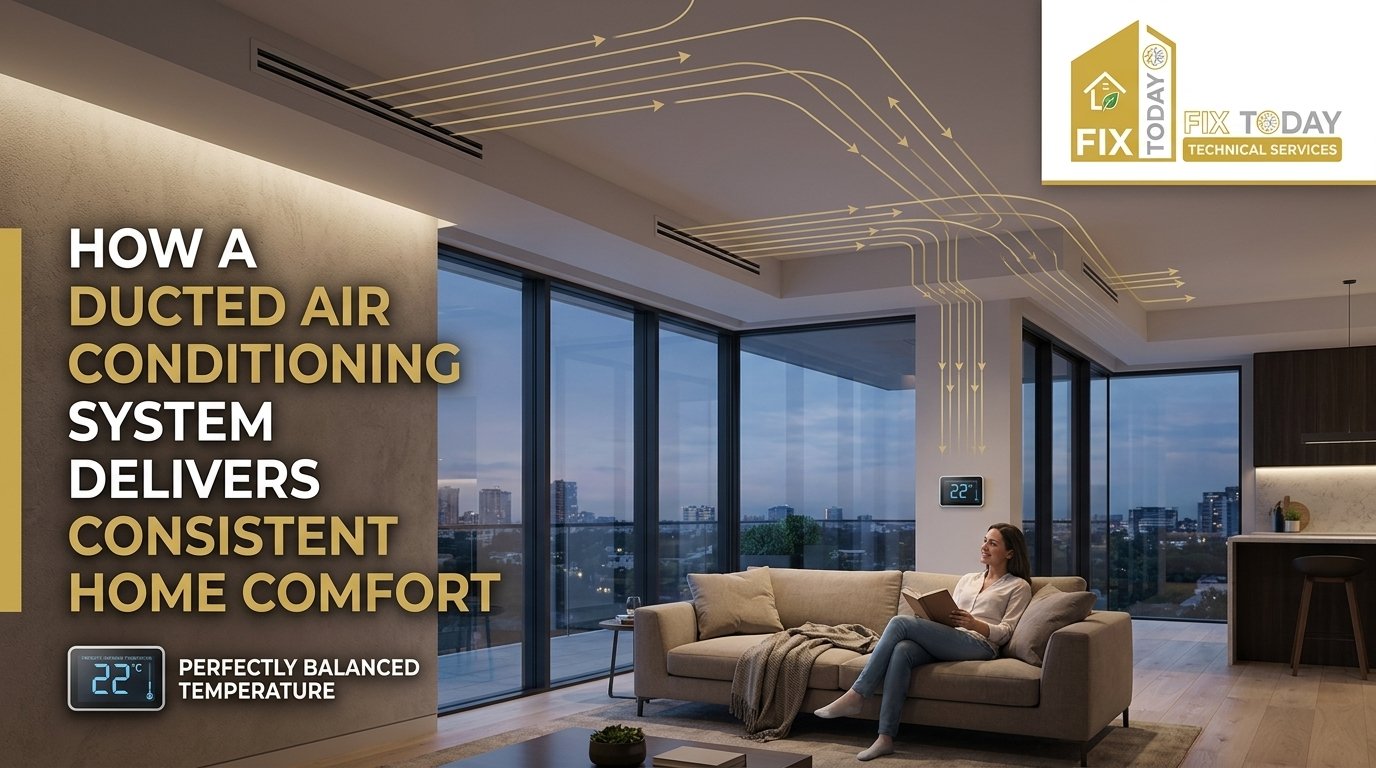
Think of the perfectly adjusted temperatures around your entire house, no debris of wall units to be seen on your wall, and whisper-quiet air conditioning that you hardly feel. It has been a problem for many homeowners to have varying temperatures in different rooms, the loudness of air conditioning systems that cause inconvenience to daily routines, and the unsightliness of the equipment that must be displayed in the interior design.
A ducted air conditioning system transforms your entire home into a climate-controlled sanctuary by distributing conditioned air evenly through concealed ductwork, eliminating temperature variations and aesthetic concerns. This guide reveals how ducted air conditioning system installations improve comfort through superior temperature control, reduced noise levels, enhanced energy efficiency, and seamless integration with smart home technology.
What Makes the Best Ducted Air Conditioning System Stand Out?
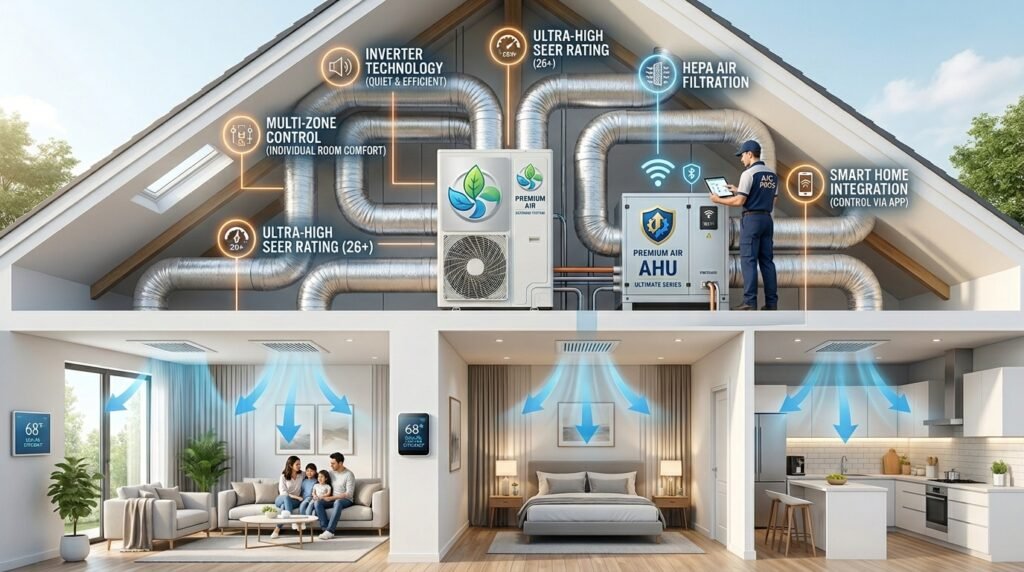
The best ducted air conditioning system stands out through superior energy efficiency ratings; advanced zoning capabilities allowing independent room control; whisper-quiet operation under 40 decibels; quality construction ensuring a 15-20 year lifespan, and smart integration features enabling remote management.
Premium ducted air conditioning system installations incorporate variable-speed compressors that adjust capacity to match cooling demands precisely, reducing energy waste from constant on-off cycling. The developed filtration systems are more advanced in eliminating allergens, dust, and pollutants as compared to the simple ones.
The ideal ducted ac system is also characterized by strong construction with corrosion resistant materials, highly insulated ductwork that reduces wastage of energy and tightly designed components that produce similar performances over an extended period.
Features of a High-Quality Ducted Air Conditioning System
High-quality ducted air conditioning system features include variable-speed inverter technology reducing energy consumption by 30-40%, multi-zone capability controlling up to 8 separate areas independently, advanced air filtration removing particles down to 0.3 microns, and smart thermostat compatibility.
Some premium system functions are:
- Inverter technology on strict temperature regulation.
- Autonomous zone temperature control.
- HEPA filter to achieve high quality air.
- Smart home system combination functionalities.
- Very low noise inside and outside performance.
- Rates of energy efficiency that are above 5 stars.
- Anticorrosion elements to the seaside.
- High-tech humidity regulation.
Why Choosing the Right System Impacts Comfort
Choosing the right ducted air conditioning system impacts comfort through proper capacity sizing eliminating hot spots and overcooling, appropriate zoning matching your home’s layout, noise levels affecting relaxation, and efficiency determining operating costs.
Smaller systems operate continuously without attaining desired temperatures, and larger systems operate in a cyclic fashion that results in change of temperatures and humidity issues. Adequate professional examination would provide the best system choice that would provide uniform comfort at reasonable cost.
How Does a Ducted Residential Air Conditioning System Work?
The operation of a ducted residential air conditioning system is as follows: Air is cooled at a central indoor unit and is distributed to each room of the house via insulated ducts embedded in ceilings or floors, which serve to supply the rooms with air which is then cooled in return through return grills.
Ducted residential ac systems have an outdoor condensing unit which rejects heat, an indoor air handling unit with the evaporator coil and blower, a ductwork net with air distribution, supply and return vents and a thermostat which controls operation. They are also not visible on the wall such as wall mounted split systems in every room, ducted residential ac systems are virtually invisible with only visible ceiling or floor vents and outside condenser.
Airflow Through the Duct Network
The flow of air over the duct network starts at the central air handler where there are blower motors that move chilled air into supply ducts that run through the home joining exit registers that condition each room before it travels through a separate return duct.
Well-engineered duct systems are able to balance the air flow so every room gets a required amount of air which corresponds to its cooling requirements. When the load of ducts and vents in larger rooms is increased, and smaller rooms receive proportionately smaller amounts.
Role of the Indoor and Outdoor Units
Evaporator coils, which absorb heat in the air passing into the unit, blower assemblies, which circulate air through ductwork, filters, which eliminate contaminants, and drainage systems, which dispose of moisture as condensate, are found in the indoor units, and compressors, which pump refrigerant, condenser coils, which reject heat, and fans are found in the outdoor units.
The indoor and outside units are compatible with each other, being coordinated components which are fine-tuned to the specifications of the other. Refrigerant absorbs or takes in heat in indoor coils, compressor forces it to the outdoor coils at high pressure, outdoor coils reject heat when refrigerant condenses, expansion valve decreases pressure and finally refrigerant recycles back.
What Is a Ducted Air Conditioning System and Why Choose It?

What is a ducted air conditioning system fundamentally involves a central cooling unit distributing conditioned air throughout multiple rooms via concealed ductwork, offering whole-home climate control, aesthetic advantages, superior temperature consistency, quieter operation, and enhanced property value.
What a ducted air conditioning system is compared to split units becomes clear when examining key differences–split systems require wall-mounted indoor units in each room, creating visual clutter, while ducted systems hide equipment behind ceilings and walls.
The preference of a ducted AC system to other options would justify large-sized homes, open-plan designs, properties where appearance is important and families who desire the same temperatures all through.
Definition and Core Components
The definition of a ducted ac system includes outdoor condensing unit, indoor air handling unit with an evaporator coil and blower, a network of insulated ductwork, supply and return vents, zone dampers to allow individual control over areas and a thermostat to control operation.
Components are part of the entire system that produces an overall climate control– the indoor unit provides cooling capacity, the outdoor unit produces conditioned air, the ductwork distributes air throughout the areas of use, the vents eliminate and introduce air, the dampers allow zone control, and the thermostats provide user interface.
Benefits Over Traditional Split Units
Ducted air conditioning system benefits over traditional split units include invisible indoor components maintaining interior design, consistent temperatures eliminating room-to-room variations, centralized control simplifying operation, quieter performance, and increased property value.
Benefits include:
- Minimalistic beauty and the absence of apparent wall units.
- Homogenized heating of the home.
- Single-point control simplified system.
- Minimised noise in the living places.
- Improved air filtration functions.
- Increased property resale.
- Zoning allows flexibility of needs.
- Reduced the cost of maintenance, in contrast to multiple splits.
How the AC Ducting System Enhances Efficiency
The ac ducting system enhances efficiency through properly sized and insulated ducts minimizing thermal loss, balanced airflow reducing fan energy consumption, sealed connections preventing air leakage, and strategic placement optimizing delivery.
A properly installed ac system can save 15-30 percent of the energy used by system with poor design. Insulated ducts help to keep cool air from absorbing heat on its way through warmer attics. Sealed joints remove the leaks through which 20-30 percent of the cooled air may escape.
Professional ac system design takes into account the construction plans, the level of insulation, the exposure of windows and patterns of use that create the best distribution that utilizes minimal energy and provides maximum comfort.
Reducing Energy Loss
Reducing energy loss in ducted air conditioning system installations involves using R-6 or higher insulation on ducts in unconditioned spaces, sealing all joints with mastic preventing air leakage, minimizing duct run lengths, and balancing airflow.
In poorly installed systems, 25-40% of the total system consumption can be lost due to energy loss in the ducts. Proper insulation lowers this to 10-15 which lowers a lot of electricity as well as electricity bills each year.
Supporting Smart Home Integration
In line with the idea of smart home integration, smart ac system designs are now being designed with Wi-Fi enabled thermostats that allow smartphones to control the temperature at a distance, scheduling functionalities that match occupancy trends, voice assistants, and rich learning algorithms that help optimize efficiency.
Intelligent integration allows energy-efficient operation systems to save energy by cooling down during unoccupancy, pre-cooling before people get home and by adjusting temperatures according to outside weather saving 15-25 energy.
How Split Duct AC Systems Differ from Traditional Split Units
Split duct ac system installations differ from traditional split units by combining centralized ducted distribution with split-system architecture, offering whole-home coverage from single indoor-outdoor unit pairs, hidden indoor components, and superior temperature consistency.
The traditional split systems have individual wall-mounted units in every room that needed to be cooled. Split duct ac systems are a type of split duct system where a single large indoor air handler supplies air to entire houses via ductwork.
Split duct ac system designs prove ideal for homes wanting whole-home comfort without multiple wall units, properties with adequate ceiling or floor space for ductwork installation, and families prioritizing aesthetics.
Centralized Cooling Advantage
The benefit of centralized cooling is in its ability to operate in diverse environments.
Split duct AC systems that are centrally cooled offer a simplified comfort to the homeowner as well as being simpler to manage. It simplifies the issues of control and maintenance by centralizing control and maintenance across the property, meaning that the conditions inside the property are always consistent, no matter where a visitor is.
- Single point of maintenance minimizes the complexity of service.
- The filtration is centralized and guarantees a steady quality of air.
- Equal distribution of temperature in all rooms.
- Single interface of the entire home.
- Does not require the supervision of several independent split units.
Space and Aesthetic Benefits
Split AC system installations provide great space and aesthetic benefits that ensure that interior environments are clean and free of clutter. Hidden elements and ventilation keep room layouts intact and at the same time they maintain effective air flow.
- Ceilings have indoor components that keep walls clean.
- There are discrete vents that are harmonious with architecture.
- Erases several outdoor condensers.
- Frees up space on the wall to furniture and decorations.
- Helps in continuous interior decoration of modern houses.
Why Investing in a Ducted Split AC System Is Worth It
Investing in a ducted split ac system proves worthwhile through superior whole-home comfort eliminating temperature variations, enhanced property value, reduced operating costs from efficiency gains, improved aesthetics, and long-term reliability.
Installation of ducted ac system is 40-60 percent higher cost than installation of several conventional wall units but the returns would be significant due to the reduction of operating expenses and higher value of the home. The 20-30 per cent monthly energy saving compounds over 15-20 years.
The value addition of property due to ducted ac system installations varies between 5 to 10 percent in the market where central air conditioning is a perceived amenity.
Long-Term Comfort and Efficiency
The benefits of ducted ac system installations in the long-term are constant temperature conditions during all seasons of the year, energy conservation, low maintenance levels, and stable performance during lifespan of 18-22 years.
The contemporary inverter-based systems continuously vary power according to demand without these temperature fluctuations that are caused by constant cycling and minimize its wear on the components.
Enhancing Property Value
Improving property value, ducted air conditioning system installations appeal to buyers of move-in ready homes with modern amenities, command a higher asking price, sell faster and show investment by the owner in quality improvement. Real estate professionals confirm ducted air conditioning systems represent significant selling advantages, particularly in hot climates where cooling represents essential features.
Frequently Asked Questions
What is a ducted and split AC system?
A ducted system employs centralized ducts that allow even distribution of the air whereas a split AC employs separate indoor units to cool individual rooms.
What is the frequency of the Air conditioner ducting system cleaning?
Ducts are ideally supposed to be inspected and cleaned after every 2-3 years to avoid dust accumulation and efficiency.
Can ducted air conditioning systems be installed in existing homes?
Yes it can be retrofitted however there should be proper planning and designing of the ac ducting in order to perform to the best of its ability.
Are ducted air conditioning systems more energy-saving over multiple split units?
Yes, since they can centralize cooling, eliminate unnecessary units and can be combined with zoning and smart controls to make them energy efficient.
Are residential ducted air conditioning systems noisy?
No, most modern ducted split AC systems operate quietly, with the indoor unit hidden and the outdoor unit placed away from living spaces.
Conclusion
Ducted air conditioning system installations transform home comfort through consistent temperatures, aesthetic advantages, superior efficiency, and enhanced property value. From understanding how ducted residential air conditioning systems operate to recognizing features making the best ducted air conditioning system stand out, informed homeowners make confident decisions.
Now that you understand how ducted air conditioning system installations improve comfort and deliver long-term value, are you ready to experience perfectly balanced temperatures? [Schedule Your Free Consultation with FixToday] and discover how a professional ducted air conditioning system transforms your living environment.