Regular AC filter replacement is one of the simplest yet most effective ways to keep your cooling system running at peak efficiency. Homeowners are faced with inefficient air circulation, increased power bills, and unequal cooling without even understanding that the filter is usually the cause of the problem. The clogging of filters with dust and allergens makes the whole system to work harder than required. The correct replacement schedule can be understood at once which can enhance comfort and performance.
Failure to take care of filters causes undue stress to inner parts and the indoor air quality is compromised. This manual describes the frequency of changing filters, the reason behind the need to clean at certain times, size considerations and the expenses one ought to expect. Through established maintenance guidelines, you will be able to increase the lifespan of the systems, reduce the consumption of energy, and ensure reliable cooling throughout the year. Making informed decisions about air conditioner filter replacement protects both your comfort and your investment.
Why Air Conditioner Filter Replacement Is Essential for Performance
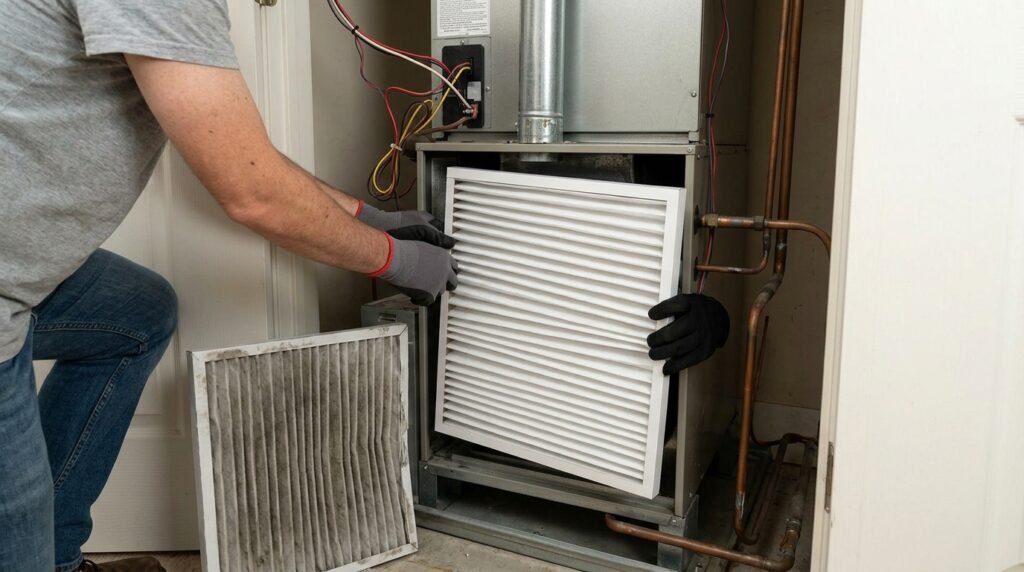
Due to dirty filters, it becomes hard to circulate cool air in your premises since they block the airflow. A limited air supply makes the system work at longer periods, which will wear out the motors and compressors. This strain decreases cooling and decreases the life of equipment as time goes by. Consistent air conditioner filter replacement keeps airflow balanced and performance stable.
Healthier indoor air is also maintained with the help of clean filters that trap dust, pollen and airborne particles. In overloaded filters, the contaminants are recirculated and this impacts levels of comfort. A timely AC filter change ensures proper airflow and supports consistent cooling in every room. This is an easy measure to ensure unnecessary failures and increase everyday comfort.
How Dirty Filters Restrict Airflow and Cooling Output.
Dirty filters are filters that block air passages and therefore force the system to push air through resistance. This decreases the amount of airflow, dilutes the cooling service, and causes an uneven room temperature. With time, less airflow leads to overheating and unwarranted stress on internal parts.
Impact of Clean Filters on Energy Efficiency.
Clean filters enable the AC to run efficiently without wastage of energy. The energy savings may be extensive in the long term in case filters are changed on schedule. Moreover, clean filters help in cutting down dust deposition on internal components within the system such as coils and ductwork. This extends system life while lowering maintenance costs, making air conditioner filter replacement a cost-effective strategy for homeowners.
How Often to Change AC Filter for Best Results
Understanding how often to change AC filter depends on usage patterns, environment, and household conditions. The pets or allergies of homes plus high-intensity ACs present the homes that need more frequent attention. Failure to observe replacement schedules causes resistance of airflow and inefficient cooling of cycles. Adhering to suggestions will mean that there is consistency in performance.
Filter life is also dependent on season changes particularly in the high summer season. When the systems are continuously running the filters are able to pick up debris at a faster rate. Adjusting replacement frequency during high-use periods supports effective AC filter maintenance. Watching filter status will allow preventing deterioration of performance before its onset.
Recommended Replacement Frequency for Different Environments.
Homes with pets, smokers, or high dust levels require more frequent AC filter maintenance. As a rule, the filters are supposed to be changed after 1-3 months in light-power usage, and in the case of using filters in high-frequent operation, the change of the filter should be once a month.
It is important to check the airflow and observe the cases. When the filters are dark, dusty, or clogged, then they require replacement although the recommended time has not elapsed.
Recommended replacement guidelines:
- Each month: Pets and smokers and allergy victims in the homesteads.
- Every 2 months: Dusty places or those that are used heavily.
- 3-month intervals: Low-traffic homes with a low level of dust.
- Immediately: Airflow is minimized or the filters appear to be dirty.
Seasonal Factors That Affect Filter Replacement Timing.
When it is hot in summer or cold in winter, your AC is started much longer and this makes your filters entrap dust and particles faster. Alternatively, an off-season is associated with a slight increase in filter life when the use is minimized, but the performance must be still observed periodically. Changing the filter replacement according to the season demand is used to maintain the regular air passage and performance.
Key seasonal indicators to watch for:
- Reduced airflow from vents
- Unusual or musty odors
- Unpredictable rise in electric bills.
- Prolonged cooling/heating period.
What Works Better AC Filter Cleaning / Replacement
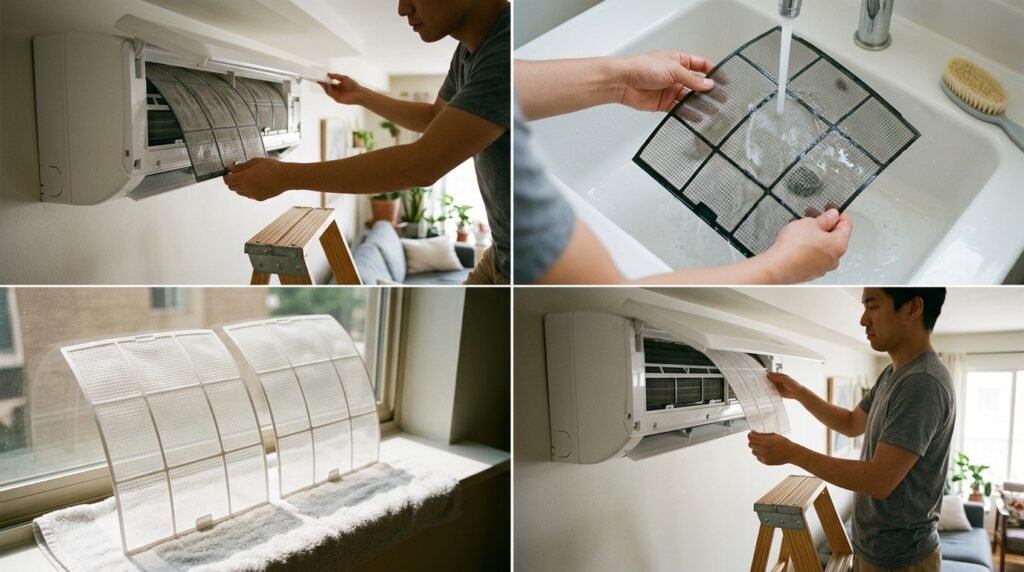
In some cases, AC filter cleaning may seem like a cost-effective solution for light dust buildup. Washable filters can be washed and reused in case they are structurally sound. Nonetheless, cleaning has no effect in restoring the filtration efficiency of disposable filters. The awareness of the right time to clean eliminates loss of performance.
The stability of the system health and the consistency of the airflow during the long time are more approved by replacement. A new filter provides a good balance of particle capturing and the airflow. Regular air conditioner filter replacement eliminates hidden buildup that cleaning may miss. This will provide a better cooling reliability and less strain.
When AC Filter Cleaning Is Acceptable
There are reusable filters, which can be washed with water or vacuum. AC filter cleaning can remove surface dust and temporarily extend the filter’s usability between replacements.
Nevertheless, the efficiency of the filter is not restored after cleaning, and the filter, which has been contaminated with pollutants, can be filled with the contaminated components. This process is only applicable when the filter is not extremely dirty and allows it with a firm permission of the manufacturer. Where the level of dust in the house is low and the AC is used sparingly, periodical cleaning can be used to keep the air flowing. Nevertheless, when the allergy-prone environments or high-usage are considered, the safer and more efficient option is the regular replacement.
Why Replacement Is Better for Long-Term Performance.
The replacement of the filter ensures a hundred percent efficacy in filtration. Old filters can decrease the quantity of air flowing into the airline and become a strain on the system, which cannot be corrected solely through cleaning.
Proper AC filter replacement will help in ensuring that dust and allergens will not escape, there will be energy efficiency, and the AC system will be in a position to run in a reliable manner over a long period of time.
Understanding AC Filter Sizes and Compatibility.
The airflow and the filtration efficiency are very dependent on the correct sizing. With a wrong filter size, the air will be able to pass through the filter with dust being collected in the system. An AC filter size guide helps homeowners identify the correct dimensions quickly. Fit can be used to guarantee the highest level of filtration and airflow.
Inappropriate sizing will lead to rattling and lack of efficiency as well as coils build up dust. Filtering can result in harm to internal parts due to filters being too fine or too thick. Following a trusted AC filter size guide prevents avoidable system stress. Appropriate sizing is conducive to the long run performance and comfort.
Using an Accurate AC Filter Size Guide
The size of the filter is also critical in the selection of a proper fit and operation. Improper sizes can result in air bypass, which will decrease the level of filtration and the overall system operation. Refer to the AC manual or manufacturer specifications to find the correct AC filter size guide for your unit. Sizing is correct to provide correct coverage, proper air flow and avoid excessive load on the blower motor. The appropriate filter also enhances the quality of indoor air by trapping pollutants. Installing the filter Measuring the existing filter or consulting a professional is used to prevent mistakes during installation and untimely filter failures.
Problems Caused by Incorrect Filter Sizes.
Small and large filters may cause holes, block airflow, and make them use more energy. Such openings permit dust and debris to get past the filter, which causes internal AC parts to be contaminated and less efficient cooling.
Using the right size is critical for HVAC filter replacement and optimal AC performance. The correct sizing of filters keeps the quality of the indoor air in shape, ensures an equal flow of air, and helps to avoid premature wear of the system.
Poor sizing may also lead to the blower motor working more intensively leading to an increment in electricity bills in the long run. In extreme situations, it can cause frequent breakdowns and high costs in repairing the system as a result of overstraining the system.
HVAC Filter Replacement and Whole-System Performance
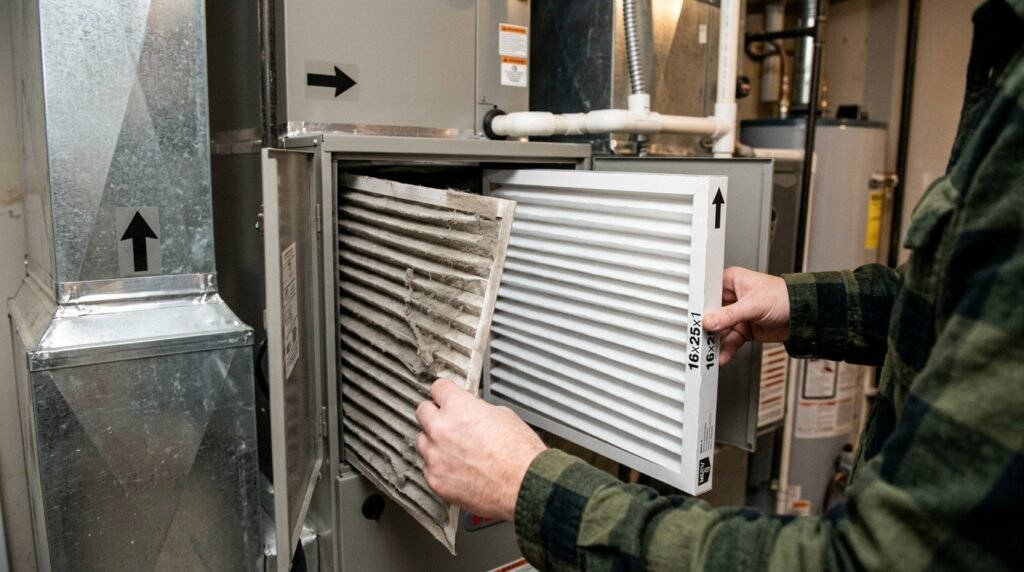
HVAC filter replacement plays a key role in protecting the entire heating and cooling system. There are filters that do not allow dust to settle on coils, blowers and ducts. Efficiency is created by clean airflow, and the system strain is minimized. The correct filtration facilitates the maintenance of balanced temperatures within the premises.
Delaying HVAC filter replacement leads to dust buildup that affects multiple components. This raises the rate of repair as well as shortening system life. Periodic filter maintenance facilitates the maintenance of regular airflow and a less noisy functioning. Filter condition is of great importance in whole-system efficiency.
How HVAC Filter Replacement Supports Overall Efficiency
Regularly changing filters will make sure that the whole HVAC system will be working in an optimum way. Clean filters permit air to flow easily across the ducts, coils and vents leading to rapid cooling, equal air flow, and greater indoor comfort in all rooms. In the event that the airflow is unhindered, the system does not have to overwork to stabilize defined temperatures.
HVAC filter replacement also minimizes dust and debris buildup on critical mechanical components such as coils, motors, and fans. This shield minimizes wear and tear, minimizes the chances of unpredictable failure and aids in managing energy usage. With time, a regular replacement of filters will result in a low maintenance cost, system reliability and a long HVAC life.
Connection Between Filters and System Longevity.
Failure to take care of air filters influences the HVAC system to work with endless load because of the limited airflow. The dust and debris get around the blocked filters and get deposited on vital parts of the machine such as the compressor, the evaporator, and the condenser coils. This accumulation lowers the heat exchange efficiency and overheating of the parts increases significantly. With time, too much work will make it wear out and become prone to unexpected failures.
Regular ac filter replacement maintains smooth airflow and protects internal components from contamination. Clean filters assist the system to operate at constant temperature and minimize pressure on motors and fans. Due to this, the AC unit will last longer, fewer repairs will be necessary and it will provide year-round cooling control.
AC Filter Replacement Cost and Value Comparison
Understanding ac filter replacement cost helps homeowners budget for routine maintenance. Filter prices differ in accordance to the size, material and the level of filtration. As compared to regular filters, the premium filters tend to be more expensive in the short run but prove to be more durable and effective. A prudent investment will save the cost in the long run.
Regular change of filters lowers the energy costs and decreases maintenance requirements. Comparing ac filter replacement cost against potential breakdowns shows clear value. Preventive maintenance is always less expensive than the emergency repairs. Constant change offers high returns by efficiency and reliability.
Typical AC Filter Replacement Cost Explained
AC filter replacement cost varies by filter type, size, and quality. Normal filters tend to be inexpensive and the HEPA or special filters are a little more expensive.
They are of a small value in comparison with possible repair of the filters, and therefore, timely replacement is a cost-effective option.
- Call-out & inspection: AED 100–150
- Filter replacement (estimated): AED 750 and above.
- AC cleaning service: from AED 150
- Deep cleaning: from AED 450
- Duct cleaning: starting at AED 650 unit.
Cost Savings from Regular Filter Maintenance.
Regular ac filter replacement plays a major role in controlling long-term HVAC expenses by keeping airflow unrestricted and system operation efficient. The clean filters serve to minimize the compressor, motors, and coil stress, as well as give the system the chance to cool more quickly and with less electricity. With the airflow constant, the AC will operate with fewer cycles, and this will directly reduce the monthly energy costs, as well as operational tension.
Long-term cost-saving benefits include:
- Reduce electricity charges as a result of better ventilation.
- Lowering of the load on compressors and motors.
- Reduced emergency call inspections.
- The HVAC components have long lifespan.
- Less frequent major repairs
- Better efficiency of the system as a whole.
FAQs (People Also Ask)
How often should ac filter replacement be done?
Most of the homes need replacement after 30 to 90 days with respect to the usage and conditions.
Does AC filter cleaning work as well as replacement?
A washable filter can be washed with the aid of cleaning, whereas the disposable type is better replaced.
What happens if I delay the AC filter change?
Air circulation decreases, consumption goes higher and inner parts deteriorate.
What is the right size of the AC filter replacement?
Measure length, width and thickness of filter label that is there and verify.
Is HVAC filter replacement different from standard AC filters?
Whole system protection of HVAC systems is frequently achieved by using higher capacity filters.
Conclusion
Consistent ac filter replacement is a small habit with a big impact on comfort, efficiency, and system lifespan. Clean filters do not only improve the airflow but also save on energy and expose the critical parts to unwarranted stress. You are either shifting the timetables, verifying dimensions, or just contrasting prices; appropriate care of filters ensures cooling performance all year round.
In case your AC is weaker, noisier, inefficient, etc., you can not afford to wait till bigger issues might emerge. Check the filter today and update your maintenance schedule with FixToday. With the smart filter control, the air in the home becomes cleaner, the bills get smaller, and the cooling is reliable until 2026 and beyond.