Nobody thinks about their geyser until it drips through the bedroom ceiling or the shower runs cold at 6 a.m. Most of those problems start on day one, with how the heater was installed. Good water heater installation takes planning, and it matters just as much in a Jumeirah villa as in a rented flat in Sharjah.
What your home needs depends on the heater type, your bathroom layout, and the pipes and wiring already behind the wall. This guide covers the heater types common in UAE homes, what to check before anyone drills a hole, how bathroom geyser fitting works, the safety points that count and when to bring in a professional.
Types of Water Heaters Used in UAE Homes
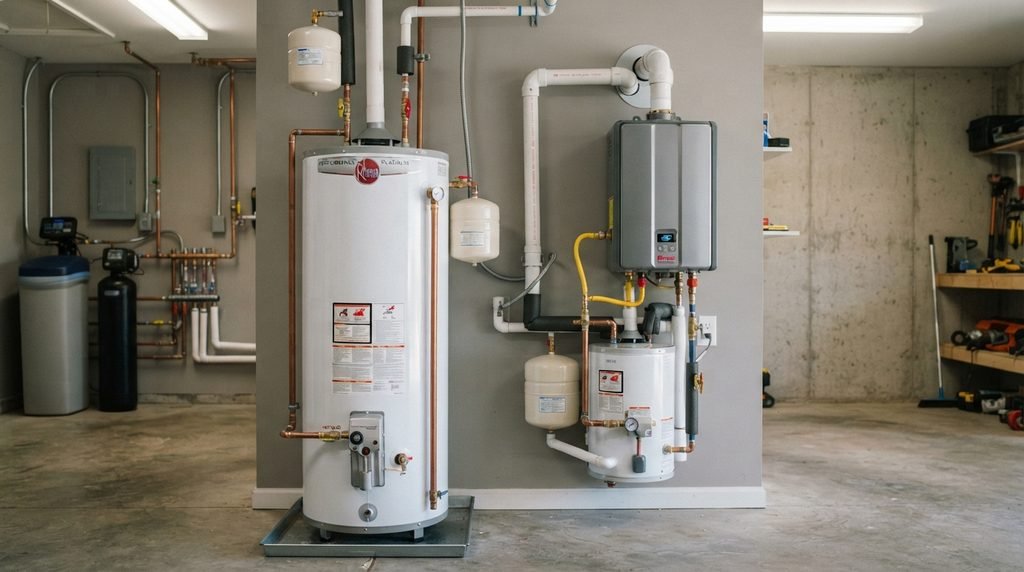
Three types cover most homes here. Each one asks for something different from the installer, and each one suits a particular kind of household. The right choice also makes hot water installation simpler from the start.
Storage Water Heaters
A storage heater keeps a tank of hot water ready, so you can run the shower and the kitchen tap together without a drop in temperature. A heating element warms the water and a thermostat keeps it steady. The catch is weight. A full 100-litre tank is heavy, so you need a solid wall and enough room around the unit.
Instant Water Heaters
An instant heater has no tank. It heats water as it passes through, which makes it small enough for a tight bathroom or a kitchen sink. It also pulls a lot of power in a short burst. Have an electrician check your circuit before you buy one, because many older apartments weren’t wired with these units in mind.
Electric Water Heaters
Most geysers in UAE homes run on electricity, and both storage and instant models fall into this group. Proper electrical earthing and a circuit that matches the heater’s rating are the basics. A technician should confirm both during electric water heater installation, because a heater that works today can still carry a hidden fault.
What to Check Before Water Heater Installation in the UAE
A little homework saves a lot of grief. Before you book water heater installation, go through this list:
- Space: Measure the bathroom or utility area, and don’t forget the false ceiling height.
- Wall strength: The wall must hold the full weight of a filled tank. Hollow partition walls often can’t.
- Water lines: Find the hot and cold supply and the nearest drain.
- Power supply: Check the circuit capacity and whether the heater can have its own line.
- Heater size: Match it to the number of people in your home and how they use hot water.
- Access: Leave room to reach the thermostat, valves and joints later.
- Manual: Read the manufacturer’s instructions first.
Skip these checks and you can end up with a heater that looks fine for a month, then leaks at a joint or trips the breaker. Tenants should talk to the landlord before any plumbing or electrical changes. Apartment residents should also ask the building management what rules apply, since a leak affects the flat below. Careful hot water installation protects your neighbours as well as you.
Bathroom Geyser Fitting Requirements
A bathroom is a small, damp room full of metal pipes, which makes bathroom geyser fitting a job for careful hands. These points matter most:
- Location: Pick a spot the shower spray can’t reach.
- Clearance: Leave the gap the manufacturer specifies around the unit.
- Brackets and wall: Use brackets rated for the filled weight and fix them into solid wall, not loose plaster.
- Connections: Connect the hot and cold lines to the right ports and fit isolation valves so a plumber can shut things off later.
- Access: You should be able to inspect the heater without breaking tiles.
- Moisture: Keep all electrical parts away from water.
Think about the person who services the heater in three years’ time. If they can reach the valves and the thermostat easily, repairs cost less and take less time.
How to Install Water Heater in Bathroom: What the Process Involves
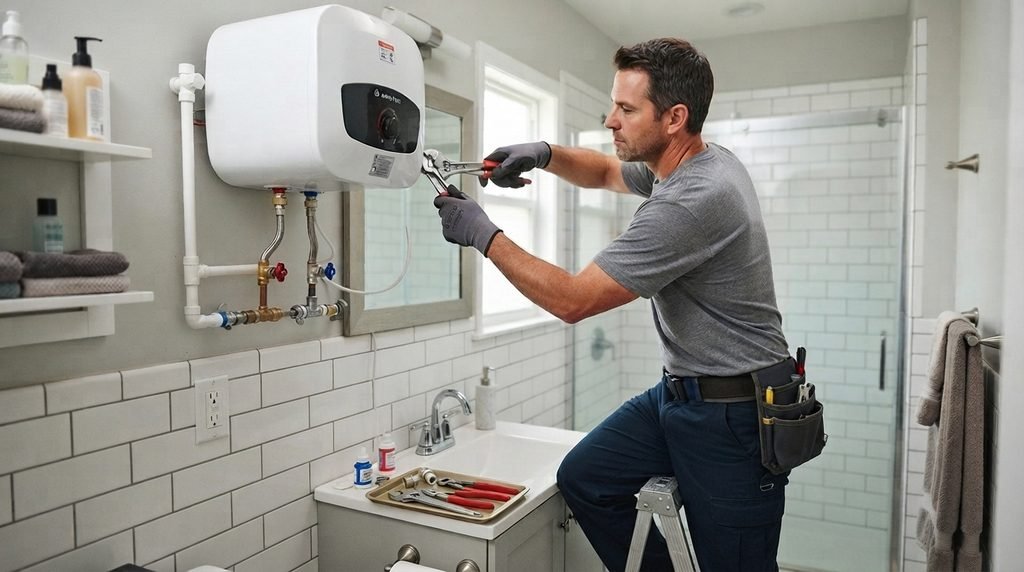
Plenty of people search for how to install water heater in bathroom spaces, so here’s what a technician actually does. Treat it as an overview, not a weekend project. Electrical and plumbing work belongs to qualified professionals.
Step 1: Inspect the Installation Area
The technician looks at the wall, the pipes and the electrical supply. If the wall is weak or the wiring is too old, they fix that before anything gets mounted.
Step 2: Position and Secure the Heater
Next, they mark the spot, fix the brackets and hang the heater following the manufacturer’s specifications.
Step 3: Connect the Water Supply
The hot and cold lines go on, along with isolation valves and, where required, a pressure relief valve.
Step 4: Complete Electrical Connections
An electrician wires the heater with proper earthing, suitable circuit protection and a cable that suits its rating.
Step 5: Test and Commission the System
Lastly, the team fills the tank, checks every joint for leaks, tests the connections and confirms the heater runs safely.
Electrical and Plumbing Safety During Installation
Water and electricity share the same small space here, so the safety details deserve plain language. Safe electric water heater installation rests on a few essentials:
- Earthing: It gives a fault somewhere safe to go instead of through a person.
- Circuit protection: The breaker must suit the heater’s load.
- RCCB/ELCB: Where required, this device cuts the power fast when it detects an earth fault.
- Wiring and switch: The cable must handle the load, and the isolating switch should sit where you can reach it safely.
- Pressure relief valve: A correctly fitted valve lets excess pressure escape.
- Pipe joints: Every joint should sit tight and dry.
- Leak test: The team checks for leaks before they switch the power on.
All work must follow the manufacturer’s specifications and the UAE regulations that apply to your building. Rules differ between emirates and sometimes between developments, so confirm the current requirements with the relevant authority, such as Dubai Municipality or DEWA, before work starts.
Common Water Heater Installation Mistakes to Avoid
Most callouts for faulty heaters trace back to a handful of avoidable errors:
- Weak wall: The heater sags, and eventually the brackets pull out.
- Wrong size: A small tank runs out mid-shower. A huge one wastes electricity heating water nobody uses.
- Bad plumbing: Swapped or loose connections leak and reduce flow.
- Thin electrical protection: No earthing or no RCCB puts people at risk.
- Misplaced relief valve: In the wrong spot, it can’t do its job.
- Squeezed clearances: Cramped units are hard to service and can run hot.
- No final test: Slow leaks stay hidden until the ceiling stains.
None of these mistakes is rare. Every one of them is cheaper to prevent than to repair.
Why Choose a Professional Water Heater Installation Service in UAE?
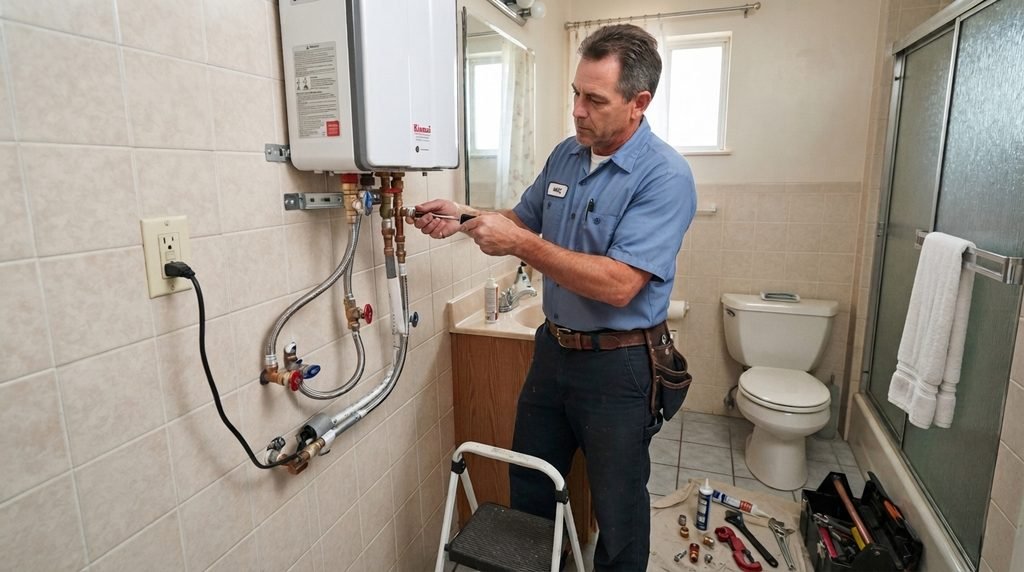
A good water heater installation service brings the right tools and a proven routine. A skilled technician will:
- Judge the wall, pipes and wiring correctly.
- Make plumbing and electrical connections that suit your heater.
- Follow the manufacturer’s requirements to the letter.
- Cut the risk of leaks and electrical hazards.
- Test the heater before leaving.
- Show you how to use it.
FixToday is a home maintenance platform that helps UAE residents arrange plumbing, electrical and general home services in one place. Whichever provider you pick, ask what the job covers and how they’ll test it. A clear answer tells you a lot, because sound hot water installation always ends with a test.
Final Checks After Hot Water Heater Installation
When the technician finishes hot water heater installation, spend five minutes walking through these points:
- No drips around any pipe joint.
- The heater sits firmly on its mounting.
- Water flows well from the taps.
- The thermostat responds when you adjust it.
- The electrical connections look neat and secure.
- The pressure relief valve and other safety parts work as intended.
- You have the manufacturer’s paperwork.
If something seems off, such as drips, odd noises or lukewarm water, call a qualified technician. Leave electrical faults to the professionals.
Conclusion
A heater that’s planned well and fitted properly gives you years of quiet, reliable hot water. A poor job does the opposite. Good water heater installation comes down to the basics: the right heater, a sound wall, correct plumbing, safe wiring and a proper test at the end. If you’d rather not gamble on any of that, explore FixToday’s water heater installation service options for your home in the UAE.
Frequently Asked Questions
1. How much does water heater installation cost in UAE?
It depends on the heater type, its capacity, how complicated the job is and whether you need plumbing or electrical changes. Ask for a written quotation after the technician has seen your site.
2. How long does it take to install a water heater?
That varies. A straightforward hot water heater installation to replace an old unit goes faster than a first-time fitting where new pipes or cables must go in.
3. How to install water heater in bathroom safely?
Pick a spot away from the shower spray, mount the unit on a strong wall, connect the plumbing correctly and make sure the electrical protection is right. Hire a qualified professional for the work.
4. What size water heater is suitable for a family?
Count the people in your home, think about how many taps run together and note how many bathrooms you have. Bigger families with several bathrooms usually need a larger storage tank.
5. What is the difference between instant and storage water heaters?
A storage heater warms water in a tank and holds it ready. An instant heater warms water only as it flows. Storage suits busy households, while instant units suit small spaces and light use.
6. Can an electric water heater be installed in any bathroom?
Not always. It depends on available space, electrical capacity, ventilation where applicable and safety requirements. A technician can confirm this on a site visit.
7. What electrical requirements are needed for electric water heater installation?
You need dependable earthing, suitable circuit protection, wiring that matches the heater’s load and a setup that follows the manufacturer’s specifications.
8. Why is a pressure relief valve important in a water heater?
It releases excess pressure before it can damage the tank or pipes. Without a working valve, the risk of failure goes up.
9. When should a water heater be replaced instead of repaired?
Replace it when leaks keep coming back, the tank shows corrosion, the water never heats properly or a major component has failed.
10. Should I hire a professional for bathroom geyser fitting?
Yes. A qualified technician handles the mounting, plumbing, wiring and testing safely, which lowers the risk of leaks and electrical faults.