Has your ac unit suddenly stopped cooling despite running continuously, or are you hearing strange noises you’ve never noticed before? These are the red flags pointing at emerging issues that deteriorate rapidly upon lack of professional intervention, causing an ultimate system failure in the hottest months of Dubai.
Understanding why your ac units fails helps you recognize problems early and make informed repair decisions that save money. This guide outlines the frequent failure modes in all types of systems and presents the practical solutions that can be used to restore the valid cooling operation.
Why Does an AC Unit Stop Cooling Properly?
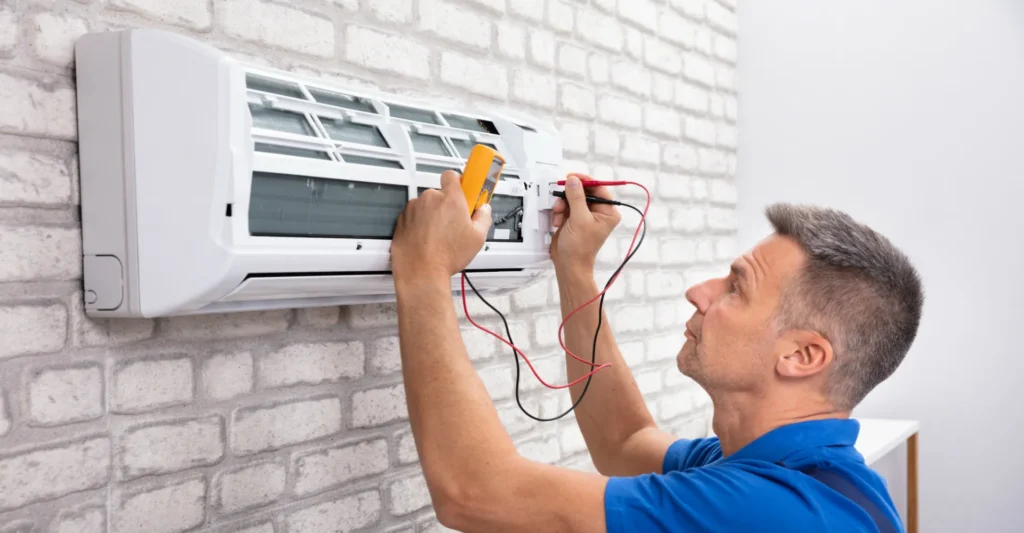
An ac unit stops cooling properly due to dirty filters restricting airflow, refrigerant leaks reducing cooling capacity, compressor failures preventing heat transfer, or electrical problems stopping operation entirely.
Majority of cooling failures are an outcome of deferred maintenance and not the impromptu failures. Dirty filters can slow the airflow by a small percentage, coils will be contaminated gradually, and refrigerant leaks will cause the charge to be lost in weeks. Early identification leads to cost effective repairing of the system before its total failure.
Is a Dirty Indoor AC Restricting Airflow?
An unclean inside ac inhibits airflow where the discovered dust on the filters, coils and blower wheels obstructs the airflow by creating resistance that leads to poor cooling, ice and consequently higher use of energy that needs urgent cleaning.
Filters collect particles that secure internal parts but would have to be cleaned monthly. Dust will be bypassed when not collected by filters to evaporator coils which lower the heat transfer efficiency. The ice develops on limited coils and totally obstructs the airflow leading to straining of the compressor.
Can a Faulty AC Compressor Cause Cooling Failure?
The ac compressor is the most expensive and essential part that requires urgent action since a faulty ac compressor generates no cooling since it is utilized to pump refrigerant that forms pressure differences that facilitate heat transfer.
Compressor failures have a presentation of loud grinding sounds, short-cycling of the system or tripped circuit breakers. The hard starting, strange noises, as well as the poor cooling capacity are the early warning signs. Early professional diagnosis is what will help identify which of the repair or replacement offers the most economical solution.
How Do Split AC Unit Failures Develop Over Time?
Split ac unit failures develop gradually through refrigerant leaks at connection points, fan motor bearing wear, capacitor degradation, and drainage blockages that progressively worsen until causing complete system failure.
Split systems are used to unite indoor and outdoor units by using refrigerant lines which leak out with time due to vibration and thermal expansion. Periodic professional checks can be used to detect the occurring issues at early stages before it turns into a total failure that will need costly emergency fixes.
What Are Common Split AC Mechanical Issues?
Some mechanical problems that are very common in splits include compressor valve failure, wear of fan motor bearings, leak in refrigerant line, capacitor wear, failure or broken drainage pump; resulting in water overflow or loss of cooling.
Mechanical failure indicators will be:
- Very loud grinding, squealing of fan motors.
- Less efficiency caused by loss of refrigerant.
- Leaked water of indoor units.
- Formation of ice on the coils inside.
- Short cycling consisting of system runs followed by stops.
How Does Improper Installation Affect AC Unit?
The inappropriate performance of split ac is its improper installation in the form of improper refrigerant charge, improper drainage slope leading to overflow, improper electrical supply, and improper mounting resulting to vibration and connection stress.
Installation mistakes lead to short-term and long-term issues- improper charge of refrigerant means the inefficiency and destruction of compressors, bad drainage results in water damage and development of mould. These expensive issues are avoided by professional installation.
When Does a Central AC Unit Require Immediate Repair?
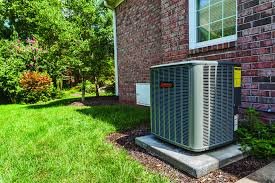
A central ac unit requires immediate repair when complete cooling failure occurs, electrical smells indicate fire hazards, water damage appears from duct leaks, or energy bills increase 30%+ without usage changes.
The failure of central systems applies to the entire population at once and attention should be given by professionals immediately. Timely repair will help avoid secondary damage, disruption, and costly cascade failures, in which a single failed part destroys other associated parts in the entire chain.
What Are Warning Signs of AC Unit Failure?
The main indicators of central ac failure are uneven temperature between zones, abnormal sounds with handlers of air, high rate of energy usage, high frequency of the tripping of circuit breakers, and ductwork musty smell.
The indications of failure are usually given weeks before full breakdown. Leaks in ducts or an uneven airflow of rooms indicate temperature differences between the rooms. Abnormal sounds suggest something wrong with the blower motor or the loosely fitting parts that need immediate inspection by the professional.
Can Duct Problems Affect Central AC Unit Efficiency?
The issues with duct lead to a loss of central ac efficiency (20-40 percent) by leaking conditioned air, inadequate insulation that leads to heat gain, and blockages that limit air movement within the distribution system.
Duct issues in terms of efficiency:
- Leakage of connections that are out of conditioned air.
- Holed insulation that results in heat gain.
- Obstructions due to debris or rubble.
- Unconnected portions completely wasting the cooling.
How Does the AC Unit Compressor Fail?
The ac unit compressor fails from electrical winding burnout, mechanical seizure, refrigerant contamination, overheating from inadequate airflow, or voltage fluctuations causing electrical damage over time.
During cooling seasons, compressors will be under extreme pressure and temperature conditions all the time. Most compressor failures are prevented by maintenance of clean coils, maintenance of appropriate refrigerant charge, maintenance of stable electrical supply and maintenance of adequate clearance.
What Causes AC Unit Overheating?
Overheating of AC compressors is caused by dirty condenser coils that make rejection of heat impossible, a lack of clearance, which limits the airflow, high ambient temperatures that are beyond the design limits, or low refrigerant that leads to excessive pressure.
The high temperatures of Dubai overwork compressors. It is important to keep the coils clean and have adequate refrigerant in them to protect it. Shade structures that limit the direct sunlight on outside units decrease the operating temperature and compressor life is prolonged tremendously.
When Should the Compressor Be Repaired or Replaced?
Replacement of compressors is required when there is a failure in electrical windings, mechanical seizure or replacement cost is more than 50% of replacement cost, or some minor problems such as failed capacitors are best repaired at an affordable cost.
Compressor failures in systems over 10 years old can be worth replacement of the entire system as opposed to costly compressor replacement of old systems that are nearing end of operational life.
Why Do Indoor AC Unit Problems Go Unnoticed?
Indoor ac unit problems go unnoticed because gradual performance decline feels normal, unusual sounds become background noise, and minor water leaks hide inside walls until significant damage occurs.
Slow degradation of efficiency is the most widely overlooked issue-systems that become 5-10% inefficient per year will seem normal since slow change will seem normal. The homeowners also adapt to a minimal change in temperature, which is warmer without noticing them as symptoms of failure that need a professional intervention.
Are Drainage Blockages Damaging the AC Unit?
Drainage blockages damage the ac unit when clogged condensate drain lines cause water overflow flooding electrical components, damaging ceilings, creating mold growth, and potentially causing complete system failure.
Condensate drains have deposited over time algae and deposits of minerals which limit flow. Most of the blockages are preventing by quarterly vinegar flushing. Wall and flooring damage due to overflow of water when blockages take place and clean up costs are extremely high compared to the cost of merely cleaning the drains.
How Does Sensor Malfunction Affect Cooling Accuracy?
Sensor malfunctions cause ac unit temperature inaccuracies, excessive cycling, inability to reach thermostat settings, or continuous operation wasting energy and stressing components beyond normal parameters.
Moved or broken sensors will display faulty readings that lead to inappropriate cycling, i.e. running when not needed and cooling down before attaining comfort. Recalibration or replacement of professionals obtains proper temperature control effectively.
How Does a Duct AC Unit Contribute to System Failure?
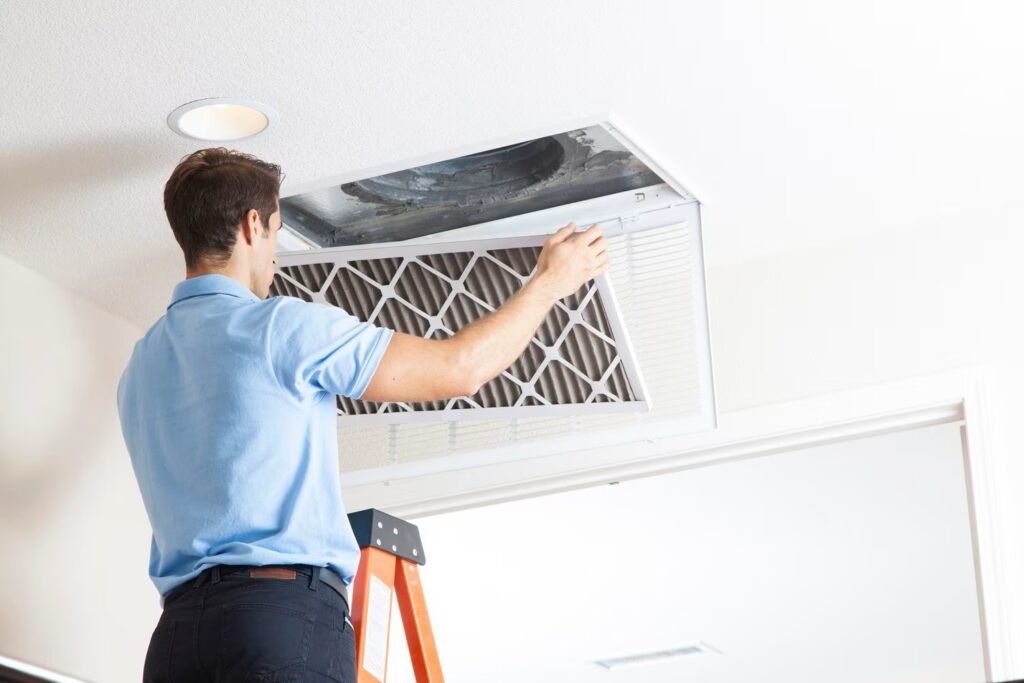
A duct ac unit contributes to system failure through leaking connections wasting conditioned air, blockages creating pressure imbalances, and poor insulation causing efficiency losses and coil freezing.
Duct systems are concealed infrastructure with massive responsibility, but little attention is given to them. Leaking ducts are also a waste of 20-40 percent of conditioned air and they also make the systems run longer and increase unnecessary wear on the components.
Can Poor Duct Design Reduce Cooling Performance?
A weak design of duct ac does not support the cooling performance by its poor sizing, excessive bends leading to higher resistance, and improper branch sizing leading to uneven distribution.
The duct design is made by professional duct designers to make sure that there is a good airflow to every space and to reduce resistance. Oversized ducts cause air to stagnate and settle as well as excessive velocity is generated in undersized ducts thus hindering effective cooling across spaces served.
How Often Should Duct AC Units Be Inspected?
Professional inspection of duct ac systems should be undertaken in residential property after every 3- 5 years and commercial buildings after 1 year, visual inspection during regular maintenance routines to determine obvious damages.
Fully inspected entails pressure testing, airflow testing, visual inspection to detect any damage and insulation testing. Dubai properties could be more often inspected because of the construction work and extreme temperature differentials that put pressure on duct materials.
Frequently Asked Questions
Why does my AC unit run but not cool?
This may indicate compressor failure, refrigerant leaks, or airflow blockage in the indoor AC unit.
How do I know if my AC unit compressor is bad?
It is characterized by common sounds such as loudness, difficulty in starting, overheating, or warm air.
How often should an AC outdoor unit be cleaned?
Once or twice a year at the latest, according to the dust and its use.
What causes a split AC unit to leak water?
Plugging of drainage, inappropriate installation or frozen evaporator coils.
When should a central AC unit be replaced instead of repaired?
In case the costs of repair are more than half the replacement value or unit is older than 10-15 years.
Conclusion
Understanding why your ac unit fails and recognizing early warning signs enables timely intervention preventing expensive emergency repairs. From dirty indoor ac components and ac outdoor unit contamination to ac compressor failures and duct problems, each issue follows recognizable patterns allowing professional correction. Routine services and timely response to the warning signals ensure safe investment in ac as well as efficient cooling services.
Now that you know why ac units fail and when professional repair becomes necessary, ready to protect your cooling system? [Schedule Your Professional AC Inspection with FixToday] and ensure your ac unit receives expert care before minor issues become major failures.