
The right HVAC Dubai setup depends on six things: property size and layout, cooling load, how many people use the space, sun exposure and insulation, budget, and how easily technicians can reach the equipment later. Dubai summers push cooling systems hard for months. A unit that is too small struggles all day, and a unit that is too big wastes power and switches on and off too often.
This HVAC Dubai guide shows you how to match a system to your property before you ask for a quote. You will see the main system types, seven factors to check, a quote checklist, and the mistakes owners make most often. Use it to walk into a site assessment with better questions.
What Does an HVAC System Do?
HVAC stands for heating, ventilation, and air conditioning. In Dubai, the cooling side gets most of the attention, but the other two parts matter too.
Cooling equipment removes heat from the air. A full HVAC system goes further. It also moves air around the property, brings in fresh air, and uses controls such as thermostats to manage temperature. In larger properties, it often includes ductwork that carries cooled air to each room.
So when you compare HVAC Dubai options, you are not just picking a brand or a capacity. You are choosing how cool air is made, how it travels, and how you control it. A complete system plan also lists the HVAC services included, such as design, supply, installation, testing, and after-sales support.
Which HVAC System Types Suit Different Dubai Properties?
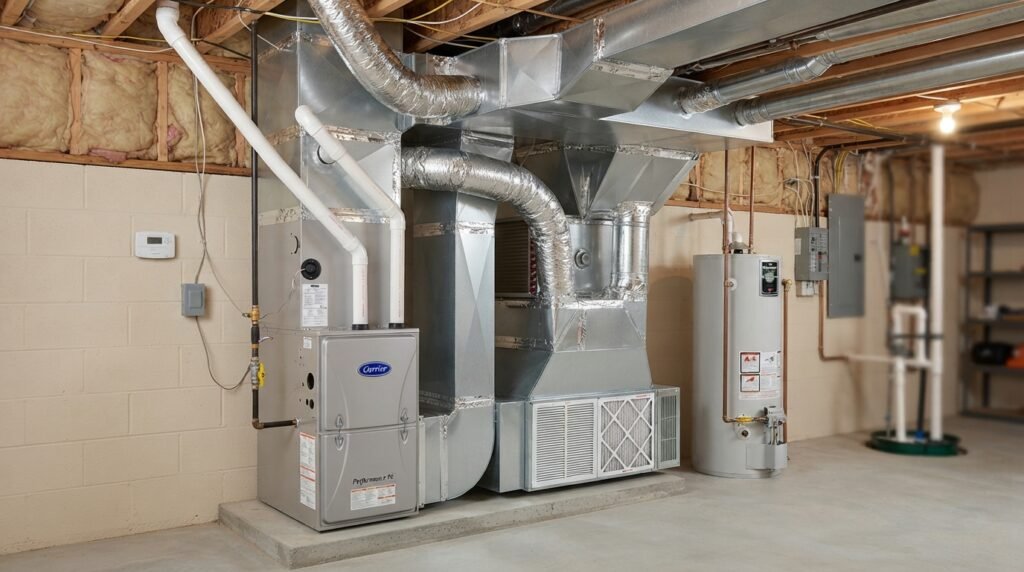
Most HVAC Dubai projects fall into one of four system types, and each fits certain buildings better than others. Here is a quick comparison, followed by a closer look at each one.
| System type | Best suited for | Planning considerations | Limitations |
| Split AC | Apartments, studios, smaller homes, single rooms | Wall space for the indoor unit, outdoor unit location, drainage route | Each room needs its own unit, so whole-property coordination is harder |
| Ducted or central | Villas and larger homes | Ceiling void for ducts, return air path, zoning plan, plant space | Needs careful design, and retrofitting can be difficult |
| VRF/VRV | Large homes, offices, mixed-use buildings | Multi-zone layout, refrigerant pipe routes, controls | Higher design complexity and upfront cost |
| Cassette | Open-plan offices, shops, showrooms | Ceiling depth, grid layout, access panel position | Needs enough ceiling space and a suitable layout |
Split AC Systems for Individual Rooms or Smaller Homes
A split system pairs one indoor unit with one outdoor unit. It suits apartments, studios, and smaller homes where each room is cooled on its own.
The main benefit is control. You can cool the bedroom at night and leave the guest room off. Installation is also simpler than for a full ducted network. The limit shows up in bigger homes. Once you need six or seven units, you have six or seven outdoor units, separate remotes, and no single view of how the property is cooled.
Ducted or Central HVAC for Villas and Larger Properties
Ducted systems deliver cool air through ceiling vents or grilles, so you see very little equipment inside the rooms. That is why many villa owners consider them.
Design matters more here than with any other type. The supplier must check ceiling and duct space, the return air path, and how many zones the property needs. A two-storey villa with a sun-facing living room and a shaded study, for example, usually benefits from separate zones. A poorly planned duct layout leads to hot spots and noise, even when the equipment itself is good.
VRF/VRV Systems for Larger Homes and Commercial Buildings
VRF and VRV systems connect many indoor units to a shared outdoor system. Each indoor unit can run at its own setting, so one floor can stay cool while another is switched off.
This flexibility suits large villas, offices, and mixed-use buildings where rooms follow different schedules. The trade-off is complexity. These systems need careful design, trained installers, and a clear budget. For a small property, they usually cost more than the property needs.
Cassette Units for Suitable Open-Plan or Commercial Spaces
Cassette units sit in the ceiling and blow air in several directions. They work well in open-plan offices, retail floors, and showrooms where wall space is limited.
Before choosing one, check ceiling depth, the room layout, and whether technicians can reach the unit later. For service details, see FixToday’s cassette AC maintenance page.
7 Factors to Check Before Choosing an HVAC System
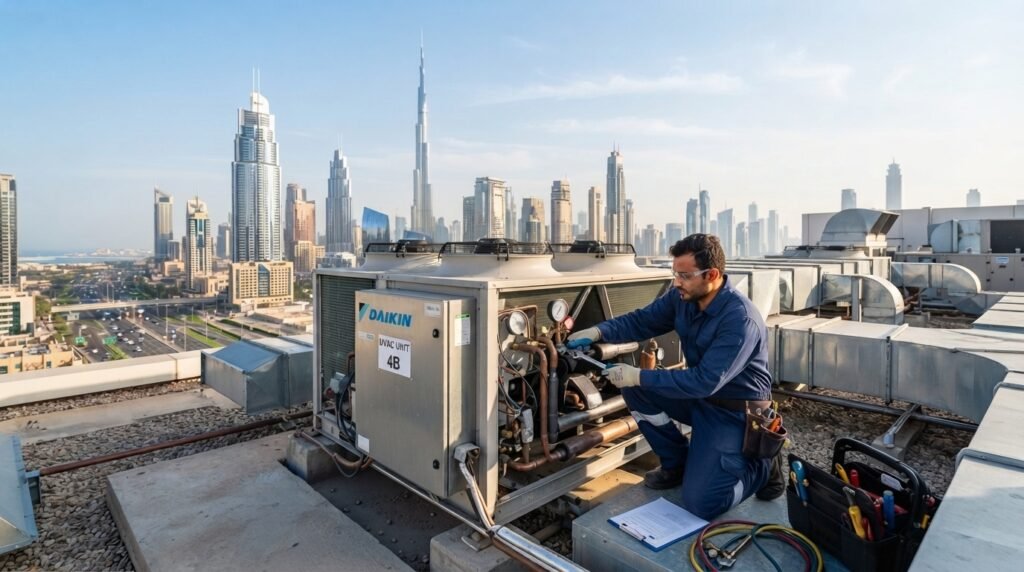
This is where most of your decision is made. Go through each factor with your contractor.
1. Property Size, Layout and Cooling Load
Floor area in square metres is only a starting point. Two flats of the same size can need very different capacity.
Cooling load depends on ceiling height, room orientation, window area, the number of people, and heat from equipment such as ovens, servers, and lighting. A double-height living room needs more cooling than a standard one with the same floor area. Because so many details change the result, ask for a professional load assessment instead of relying on a rule of thumb.
2. Dubai Heat, Sun Exposure and Insulation
Cooling demand in Dubai peaks in summer, and sun exposure decides how hard your HVAC Dubai setup has to work. A west-facing room with large glass windows will warm up fast in the afternoon. A top-floor unit or a villa with a large roof area takes in more heat than a mid-floor flat.
Check these points:
- Roof exposure and roof insulation
- Direct afternoon sun on windows and walls
- Window size, glazing type, and shading
- Wall insulation and gaps around doors and frames
Better shading and insulation can reduce how hard the system has to work. Still, no supplier can promise a fixed result without seeing the property.
3. Room-by-Room Temperature Control
Think about how each space is used. Bedrooms are busy at night. Living rooms fill up in the evening. Offices run on set hours, and meeting rooms may sit empty for half the day.
If rooms follow different schedules, look for zoning. It lets you cool only the spaces in use. If your layout is simple and everyone uses the same areas at the same time, a simpler setup may be enough.
4. Energy Use and Running Costs
Running cost is a big part of any HVAC Dubai decision, because the cheapest unit to buy is not always the cheapest to run. Over several summers, electricity use often matters more than the price tag.
Compare efficiency ratings, control options, and expected hours of use. Ask how often the system will run at full load and how thermostats or timers can reduce unnecessary use. Be careful with any claim of a fixed percentage saving, since results depend on the property, the habits of the people inside, and upkeep.
5. Installation Space and Building Restrictions
A good system on paper can still fail on site if it does not fit. Check the following early:
- Outdoor unit location and airflow around it
- Ceiling voids and duct routes
- Drainage for condensate
- Available electrical capacity
- Noise near bedrooms and neighbours
- Space for future technician access
- Landlord or building management approvals
In many Dubai communities, you need approval before changing external equipment. Ask early so the plan does not stall later.
6. Maintenance Access and Indoor Air Quality
Every system needs periodic care, and easy access makes that care simpler. Look at where filters sit, whether drain points can be reached, and how fresh air enters the space.
Ducted systems may also need an occasional professional inspection. This is where HVAC cleaning Dubai and HVAC duct cleaning Dubai come in. Whether you need either one depends on the system type, its condition, the manufacturer’s guidance, and what an inspection finds. It is worth asking about this at the buying stage, so you know what ongoing ownership looks like.
7. Budget, Warranty and Long-Term Support
Do not compare quotes by total price alone. Compare what each price covers: equipment, installation scope, commissioning, warranty terms, parts supply, and service response time.
A lower quote that leaves out drainage work or testing can end up costing more. A clear warranty and a supplier who answers calls after handover are part of the value you are buying.
How to Compare HVAC Quotes in Dubai
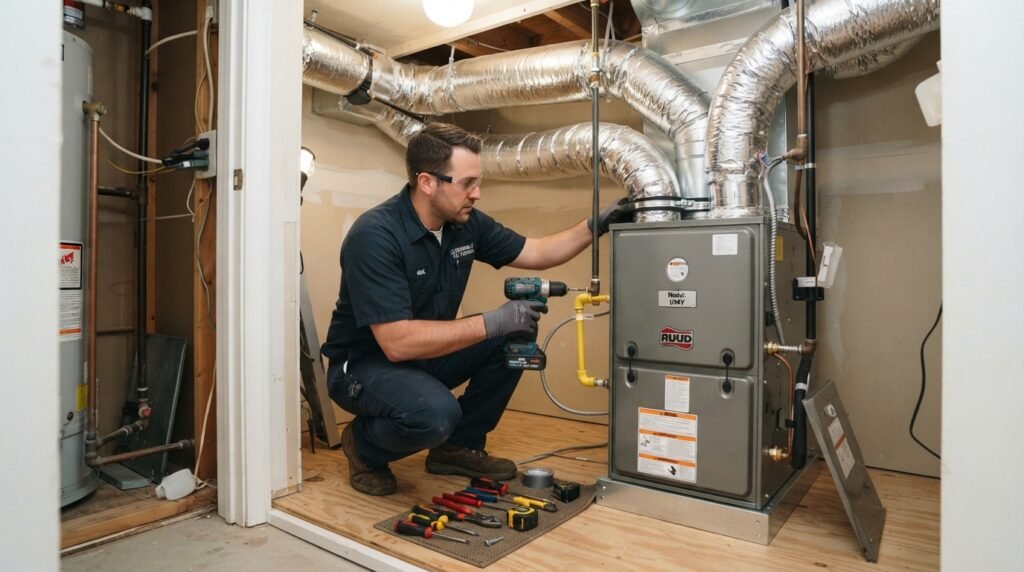
Quotes for HVAC Dubai projects can look very different, even for the same property. Getting two or three is smart. Comparing them fairly takes a little structure. Use this checklist:
- A site visit before any price is given
- A load calculation, not a guess based on room size
- The proposed system type and capacity for each area
- Itemised equipment and labour costs
- Scope for ducting, piping, and drainage
- Controls and thermostat details
- Commissioning and testing steps
- Warranty terms and exclusions
- Maintenance options after handover
When you review HVAC companies in Dubai, look at how clearly each one explains its recommendation. A good proposal tells you why a system suits your property. It does not just list a product and a price.
Similarly, when you speak with HVAC contractors in Dubai, ask who will carry out the work, how long similar jobs usually take, and who you call if something goes wrong after handover. Clear answers to these three questions say a lot about how the job will run.
What to Expect Before HVAC Installation
Good HVAC installation starts well before anyone brings equipment to your door. The planning stage usually follows this order:
- Property assessment, including measurements, sun exposure, and existing services
- System recommendation with capacity and layout
- Approvals from the landlord or building management, where needed
- Installation plan covering schedule, access, and any building rules
- Commissioning, which means testing the system once it is installed
- Handover, with a walkthrough of controls
After handover, ask for documents such as the warranty details, equipment specifications, and the maintenance advice for your system. Keep them somewhere easy to find.
Common HVAC Selection Mistakes to Avoid
Most HVAC Dubai problems come from decisions made before installation, not after. Watch for these:
- Choosing by price alone. A low quote may leave out work you will pay for later.
- Oversizing or undersizing. Both lead to poor comfort and higher bills.
- Ignoring room use and sun exposure. A system that suits one room may fail in another.
- Overlooking noise and access. Check where units sit and how technicians will reach them.
- Skipping warranty checks. Read what is covered and what is not.
- Not planning for maintenance. Think about filters, drains, and inspection access from day one.
FAQs About Choosing HVAC in Dubai
Which HVAC system is suitable for a villa in Dubai?
For an HVAC Dubai villa project, it depends on the layout, cooling load, zoning needs, ceiling and duct space, and budget. Many villas suit ducted or multi-zone systems, but a property assessment should confirm this before you decide.
Is a ducted system better than split AC?
Neither is better in every case. Ducted systems suit larger properties that need whole-home planning, while split units suit smaller homes or rooms that need individual control. Your layout and how you use each room should guide the choice.
How do I choose an HVAC contractor in Dubai?
Ask for a documented scope, relevant experience with similar properties, and a clear itemised quote. Check the warranty, the commissioning process, and what support you get after installation.
Should HVAC cleaning and duct cleaning be part of the maintenance plan?
It depends on the system type, its condition, manufacturer guidance, and inspection findings. Not every property needs the same schedule, so ask your provider what suits your system.
What should an HVAC installation quote include?
A good quote lists the system specification, the capacity and design basis, equipment, and labour. It should also cover ducting, piping, and drainage, electrical work, testing, warranty terms, and any exclusions.
Conclusion: Choose HVAC Based on Your Property’s Needs
Picking the right HVAC Dubai system comes down to your property, not a catalogue. Look at size, layout, sun exposure, room use, running costs, installation limits, maintenance access, and long-term support. Then compare quotes on scope, not just price.
If you are researching HVAC Dubai options for a home or business, a site assessment gives you the final word on sizing and system type. You can contact FixToday to discuss your property and get advice before you commit.