Cleaning removes the dirt, sediment and deposits that build up inside a storage tank. Disinfection is a separate step that reduces harmful microorganisms, provided an appropriate method is used. Water tank cleaning and disinfection only works when both stages are done in the right order, and for villas, apartment blocks and shared buildings in Dubai, that order matters more than most people realise. This guide walks through the whole procedure, from the first inspection to the moment the tank goes back into service, so you know what should happen inside the tank and what to ask for afterwards.
What Is Water Tank Cleaning and Disinfection?
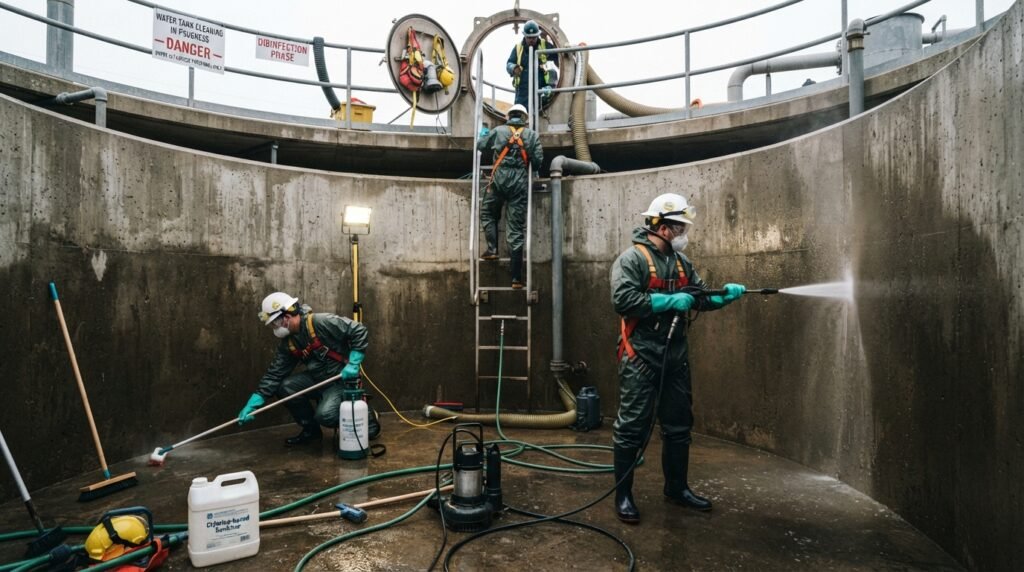
The first job is physical. Sludge, silt, loose debris and films that cling to the floor and walls are removed by draining, scrubbing or other suitable methods, depending on what the tank is made from and how dirty it is.
The second job is microbiological. Once the surfaces are physically clean, an approved disinfection method is applied to reduce microorganisms. The product, the strength and the contact time all need to follow the manufacturer’s instructions and any local requirements, not a rule of thumb.
Neither job replaces the other. Disinfecting a tank that still holds sludge wastes the disinfectant, because deposits shield microorganisms and use up the product. And a tank that looks spotless may still need disinfection, since a clean surface does not prove a clean result. That is why professionals treat water tank cleaning and disinfection as one process with two distinct stages.
How Does the Water Tank Cleaning Procedure Work?
The exact procedure for water tank cleaning and disinfection changes with the tank, the building and the provider, but a well-run job usually follows the same sequence. This is a description of what a trained team does, not a guide for doing it yourself, since entering a tank without proper controls is dangerous.
1. Inspect the tank and prepare the work area
Before anything is drained, the team looks at the tank itself: the access points, the cover, visible deposits, signs of cracks or corrosion, and how the tank is connected to the supply. Residents and building occupants should be told in advance when the work will happen and roughly how long water may be affected. In a shared building, that notice is often the responsibility of the building manager.
2. Isolate the tank and manage the stored water.
The tank has to be separated from the system it feeds so that cleaning work does not affect connected pipework. How this is done depends on the layout, and some buildings need a planned interruption.
A careful provider agrees to the arrangement with the property owner first. Residents should not be left without essential water and no suitable plan, and the isolation should never create a route for contamination into the plumbing.
3. Drain the tank and remove accumulated sediment.
Stored water is drained in a controlled way, followed by the sludge and loose debris that settle at the bottom. This waste is not clean water, so it should be disposed of properly and not discharged wherever is convenient. Asking where the waste went is a fair question to put to any provider.
4. Clean the internal surfaces.
With the bulk of the sediment gone, the floor, walls and accessible internal surfaces are cleaned to lift stubborn deposits. The method depends on the tank material, its condition and the type of buildup. A technique that suits a concrete tank may damage a plastic or coated one.
5. Apply the appropriate disinfection method.
Once the surfaces are physically clean, the disinfection stage begins. The disinfectant, its concentration, how it is applied and how long it stays in contact with the surfaces must all follow the product instructions and the relevant requirements. There is no universal figure that fits every tank, so be cautious of anyone who quotes one without looking at your system. Good water tank cleaning and disinfection depend on this stage being done by the book.
6. Rinse, refill and restore the water supply.
Depending on the method chosen, the tank may need rinsing before it is refilled. The refill and the restoration of supply should be done in a way that does not bring contamination back in, which means the cover is secured and the connections are properly reinstated before the system returns to normal.
7. Complete final checks and document the work.
The last stage is a check of visible cleanliness, tank condition, secure covers and correct restoration of the supply. Water testing may be appropriate in some circumstances. A visual inspection can show that a tank looks clean, but it cannot establish that the water is microbiologically safe. Proper water tank cleaning and disinfection ends with a report you can keep.
Does Underground Water Tank Cleaning Differ From Overhead Tank Cleaning?
Yes, in several practical ways, although water tank cleaning and disinfection follow the same core stages in both.
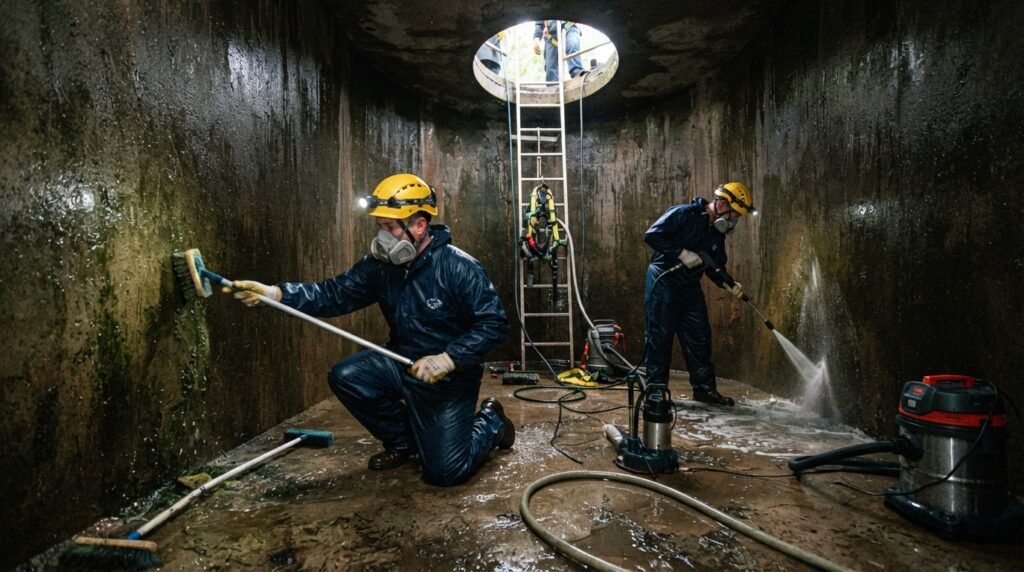
Underground water tank cleaning usually involves more difficult access, and the work area can be a confined space. Confined spaces carry serious risks, so entry should only happen after a proper assessment, with trained workers and suitable controls. Not every underground tank needs a person inside it, and some jobs can be done with equipment from the access point.
Overhead tanks are generally easier to reach, but they bring their own concerns, such as working at height and checking lids and vents that are exposed to the weather.
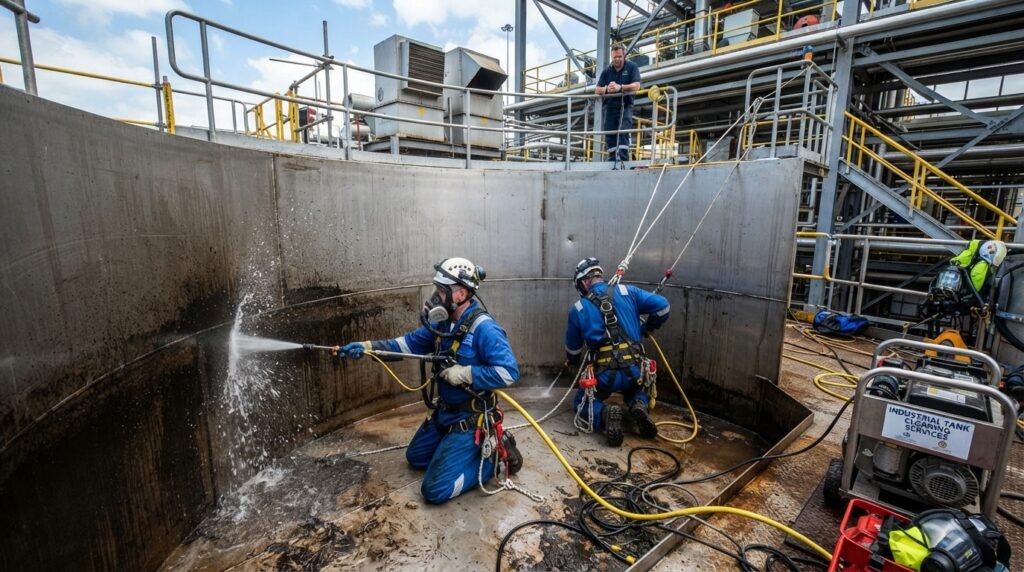
Sediment and contamination sources can also differ. Underground tanks may collect more silt and ground-related debris, while overhead tanks may pick up dust through poorly fitted covers. Drainage and waste removal need more planning underground, where gravity does not help. In both cases, the covers, access points and any visible structural defects should be inspected.
Why Does Proper Water Tank Disinfection Matter in Dubai?
Most homes and buildings in Dubai rely on stored water, whether in a villa’s tank or a shared storage system serving an apartment building. Because many people use the same supply, a neglected tank can affect more than one household.
Contamination can enter through a damaged cover, a poorly maintained access point, an unsuitable repair or another defect in the system. Dubai’s hot climate is relevant context, since heat can affect storage conditions, but warmth alone does not prove a tank is contaminated. This is why water tank cleaning and disinfection is better treated as a routine part of managing a building than as a reaction to a complaint. It guarantees nothing, but it removes known causes of trouble.
How Can You Check Whether a Tank Cleaning Service Has Done the Job Properly?
You cannot see inside a sealed tank, so a clear record is your best check. When tank cleaning services finish a job, a property owner or building manager can ask:
- Was the tank inspected before work started, and what was found?
- Which cleaning and disinfection methods were used?
- Were any defects noted, such as cracks, damaged covers or faulty fittings?
- Was the tank closed securely and the supply properly restored?
- Is there a service report or completion record?
- If testing was needed or required, are the results available?
Use the same questions when comparing water tank cleaning services in Dubai. Water tank cleaning and disinfection is not carried out identically by every provider, and a certificate on its own does not guarantee safe water.
When Should You Arrange Professional Water Tank Cleaning?
How often water tank cleaning and disinfection is needed depends on local requirements, the building’s arrangements, the condition of the tank and what earlier inspections found. This article sets no fixed interval, because the schedule should come from an official source.
Some situations call for an assessment sooner: visible sediment, an unusual smell, a damaged cover, a suspected source of contamination or a problem noticed during maintenance. When choosing a water tank cleaning company, look for one that works safely, explains its procedure and provides written records.
Conclusion
A properly done job moves from inspection and isolation through draining, surface cleaning, disinfection and final checks, with each stage setting up the next. The right approach depends on the tank’s design, how contaminated it is and the requirements that apply to your property. If you want your residential or commercial tank assessed, FixToday UAE can arrange an inspection and explain what your tank needs. Done properly, water tank cleaning and disinfection protect the people who rely on that supply every day.
Frequently Asked Questions
What is the difference between water tank cleaning and disinfection?
Cleaning removes physical deposits such as sludge, sediment and surface buildup. Disinfection uses an appropriate method to reduce microorganisms. Cleaning comes first, because deposits can reduce the effect of the disinfectant, and neither stage substitutes for the other.
How does water tank cleaning and disinfection work?
It follows a sequence: inspecting the tank, isolating it, draining the water, removing sediment, cleaning the surfaces, applying a suitable disinfectant, then rinsing, refilling and carrying out final checks. Water tank cleaning and disinfection ends with a record of the work.
How often should water tanks be cleaned in Dubai?
The schedule for water tank cleaning and disinfection should follow the requirements that apply to your property and the condition of the tank. No single interval suits every building, so check current guidance from the relevant authority.
Is underground water tank cleaning different from overhead tank cleaning?
Yes. Underground tanks usually mean harder access, more complex drainage and added confined-space risks, so safety controls matter more. Overhead tanks are easier to reach but involve working at height and checking exposed covers. The core cleaning and disinfection stages are similar.
How can I choose water tank cleaning services in Dubai?
Look for a documented procedure, suitable equipment, safety controls, transparent reporting and compliance with applicable requirements. For reliable water tank cleaning and disinfection, the paperwork is as important as the work.