A dripping tap doesn’t feel like an emergency. Neither does a slightly slow drain or a water heater that takes an extra minute to warm up. That’s usually the problem — most plumbing disasters don’t start as disasters. They start as something small enough to ignore, right up until they aren’t.
If you’ve ever had to rip out a kitchen cabinet because a supply line had been leaking behind it for months, you already know how this goes. A proper plumbing repair service exists to catch these things before they turn into a much bigger, much more expensive job.
This guide walks through what a plumbing repair service actually covers, the signs that tell you it’s time to call one, what’s different about plumbing in a place like Dubai, and how to pick a company that won’t cut corners. By the end, you’ll know exactly what to look for — and what to avoid.
Understanding Plumbing Repairs — The Basics
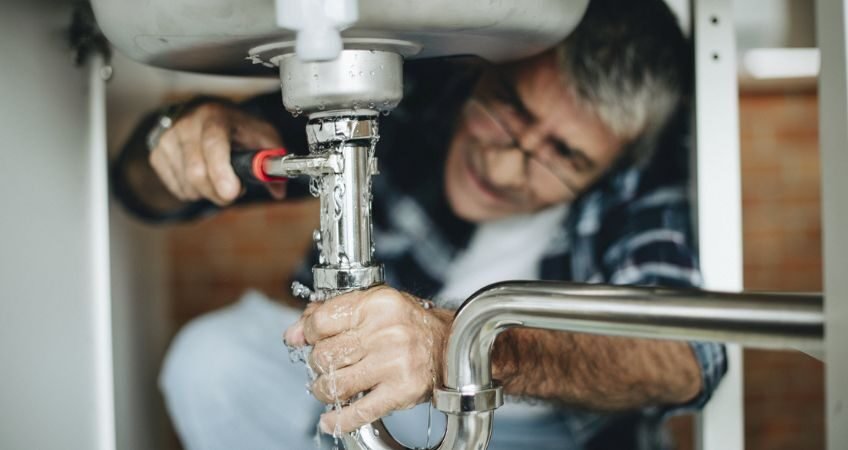
At its simplest, a plumbing repair service fixes anything in your water, drainage, or gas-line system that isn’t working the way it should. That’s a wide net. It covers a leaking pipe under the sink just as much as it covers a burst mainline outside the house, or a water heater that’s stopped producing hot water altogether.
What separates a repair from a routine maintenance job is urgency and cause. Maintenance is scheduled — flushing a hot water tank once a year, for example. A repair happens because something has already gone wrong: a joint has failed, a valve is stuck, a pipe has corroded through. The goal of a repair visit isn’t just to patch the symptom. A plumber worth hiring will trace the fault back to its source, because fixing the leak without fixing what caused it just buys you a few more months before it happens again.
Most repair services fall into a handful of categories: leak detection and repair, drain and sewer line clearing, water heater repair, fixture repair (taps, toilets, showers), and pipe replacement for older or corroded sections. Some companies also handle gas line repairs, though that work usually requires separate licensing — worth checking before you book.
Warning Signs Your Pipes Are Trying to Tell You Something
Plumbing problems rarely announce themselves clearly. They show up as small, easy-to-dismiss changes around the house. A few worth paying attention to:
- Damp patches on walls or ceilings, especially ones that keep coming back after you’ve wiped them down. This usually means water is traveling somewhere it shouldn’t, often inside a wall cavity or under flooring.
- A dripping or hissing sound when no taps are running. If you can hear water moving through the walls at 2am, there’s a good chance you’ve got a pressurised leak somewhere in the line.
- A water bill that’s jumped without an obvious reason. A toilet that runs continuously, or a slow leak in an underground line, can add hundreds to a bill before anyone notices anything visibly wrong.
- Water pressure that’s dropped noticeably. Sometimes this is just mineral buildup in an old showerhead. Sometimes it’s a partial blockage or a leak further up the line pulling pressure away from your fixtures.
- Discoloured water, particularly a rusty or brown tinge when you first turn a tap on. That’s often a sign of pipe corrosion, which won’t fix itself and tends to get worse with time.
None of these are emergencies on their own. But ignored together, or ignored for long enough, they’re exactly the kind of thing that turns a $200 repair into a $3,000 one.
What Happens During a Repair Visit — Diagnosis to Fix
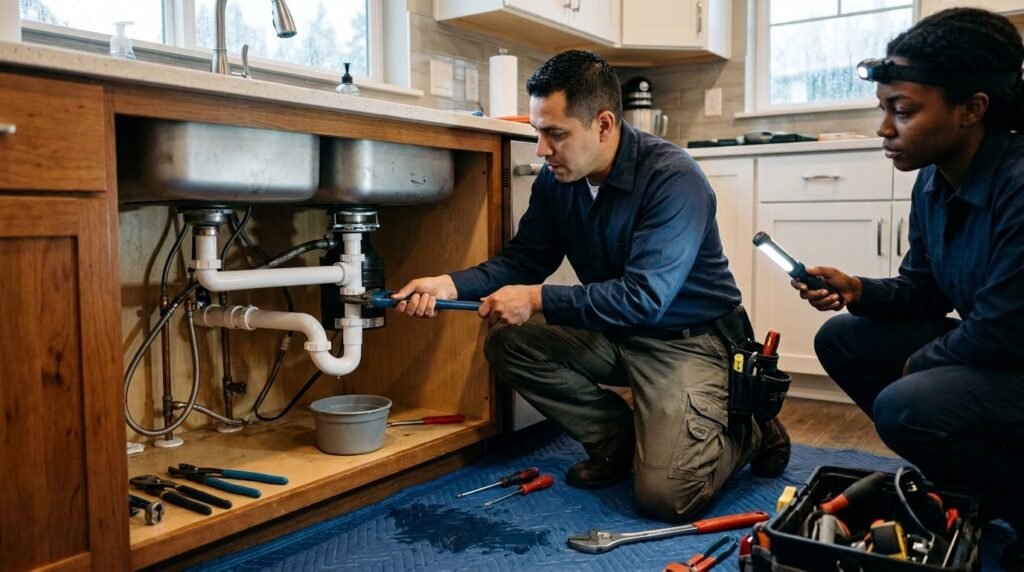
A good plumbing service repair follows a fairly predictable sequence, even if the problem itself is unpredictable. First comes diagnosis: the plumber walks the affected area, checks water pressure, and in trickier cases uses tools like moisture meters or acoustic leak detectors to find a fault that isn’t visible from the surface. This step matters more than people expect. A rushed diagnosis is how you end up paying for a repair that doesn’t actually solve anything.
Once the cause is identified, you should get a clear explanation of what’s wrong and what it’ll take to fix—not just a number. From there, the actual plumbing service repair work begins: replacing a section of corroded pipe, resealing a joint, clearing a blockage, or swapping out a failed valve or fixture. Straightforward jobs, like a leaking tap washer or a blocked drain, are often sorted within an hour. More involved repairs a slab leak or a section of pipe that’s failed underground—can take a full day or longer, particularly if access requires cutting into a wall or floor.
A repair isn’t really finished until it’s been tested under normal water pressure and the area’s been checked for any secondary damage. Reputable providers will also tell you honestly if something is a temporary fix rather than a permanent one — that distinction matters, especially in older properties.
Emergency vs. Scheduled Repairs — Knowing the Difference
Not every plumbing issue needs someone at your door within the hour, and knowing the difference saves you money.
Emergencies are things that are actively causing damage or risk right now: a burst pipe flooding a room, a gas smell near an appliance, sewage backing up into the house, or a hot water system leaking near electrical fittings. These need a same-day or after-hours call, and most established companies charge a premium for it reasonably, since it means pulling someone off another job or out of bed.
Scheduled repairs cover everything that’s a problem but not an active crisis: a slow drain, a toilet that runs longer than it should, a tap that drips but isn’t flooding anything. These can usually wait a few days for a normal appointment slot, which is almost always cheaper than an emergency callout. The trick is not letting a “scheduled” issue sit long enough that it becomes an emergency, which, with plumbing, happens more often than people expect.
Dubai Homes and Buildings: Unique Plumbing Challenges
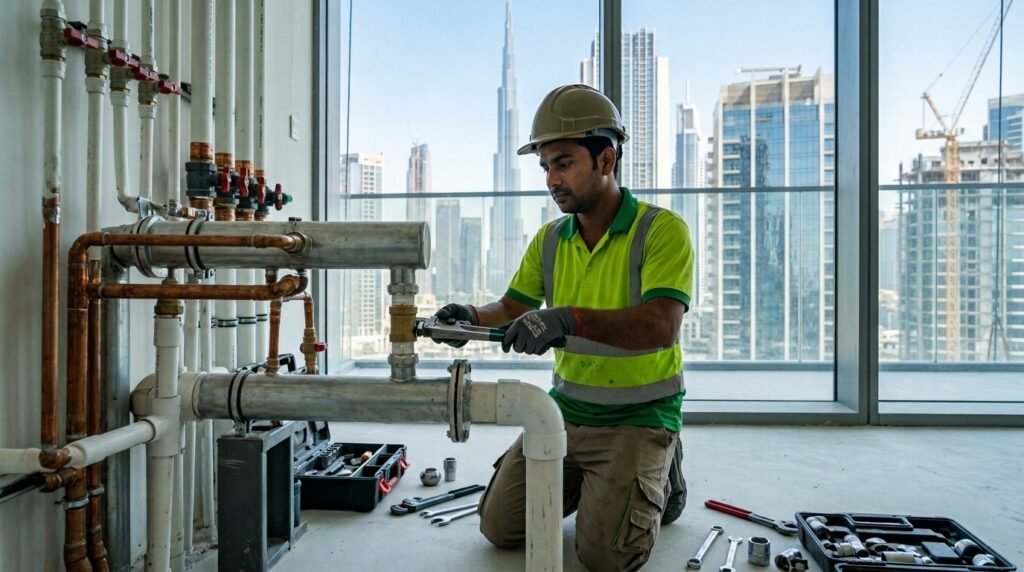
Plumbing in Dubai deals with a different set of pressures than plumbing in most other places, and it’s worth understanding why before you assume a repair is a one-off. Water hardness is the big one. Dubai’s tap water has a high mineral content, and over time that builds up inside pipes, taps, and water heater elements as limescale.
It narrows pipe diameter, restricts flow, and shortens the working life of fittings that would otherwise last years longer. If you’ve had the same tap repaired twice in eighteen months, hard water is probably part of the story and a plumbing repair services dubai provider who’s used to this will typically recommend a descale or a filtration fix alongside the actual repair, not just the fix itself.
Building type changes the picture too. High-rise apartments generally share plumbing risers with other units, which means a leak on one floor can show up as a ceiling stain two floors down, and getting to the actual source sometimes means coordinating with building management, not just the unit owner. Villas, on the other hand, often have longer exposed pipe runs and irrigation lines that sit outside, which brings its own wear from heat and UV exposure that apartment plumbing simply doesn’t deal with.
Older buildings across the city can still have galvanised steel piping, which corrodes from the inside in a way that’s invisible until it fails. If your building was constructed before the shift to copper and PEX became standard, that’s worth asking about directly when you’re getting quotes for plumbing repair services dubai companies offer it changes what a “repair” should actually involve.
Vetting a Provider — Licensing, Pricing, and Red Flags
The plumbing trade has a low barrier to entry, which is exactly why the range in quality is so wide. A few things worth checking before you commit:
Licensing and insurance. A legitimate company should be able to produce a trade license and liability insurance without hesitation. If someone’s cagey about either, that’s a red flag on its own.
Written quotes, not verbal estimates. A number given over the phone before anyone’s seen the problem is a guess. A written quote after an inspection is a commitment. The difference matters when the final bill arrives.
How they price emergency work. Ask upfront what the after-hours callout fee is, and whether it’s a flat rate or hourly. Companies that dodge the question tend to be the ones that pad the invoice later.
Reviews that mention specifics. “Great service” tells you nothing. A review that says the plumber explained the cause of a recurring leak or showed up within the promised window, tells you a lot more.
Warranty on the work. A repair that’s done properly should come with some guarantee, commonly 30 to 90 days, covering the same issue recurring. No warranty at all is worth asking about directly.
Searching Locally? Here’s What “Near Me” Should Actually Mean
Typing “plumbing repair service near me” into Google gets you a list, but proximity alone isn’t the thing that matters. What actually matters is response time, and those aren’t always the same.
A company based fifteen minutes away with a dedicated emergency crew will often reach you faster than one that’s technically closer but running a single van across the whole city. Before you assume “near me” means “fastest,” it’s worth checking a few things directly: whether they offer same-day appointments, what their actual coverage area is (some companies list a city-wide service area but concentrate technicians in one part of it), and whether the reviews specifically mention response time in your neighbourhood rather than just general satisfaction.
A quick call before you’re in a crisis is the easiest way to find this out. Ask how soon someone could realistically be at your door on a normal weekday, not just in theory. The answer tells you more than the map pin does.
Cost — What Drives the Price Up or Down
Plumbing repair pricing varies more than most homeowners expect, and the reason usually comes down to a handful of factors rather than one flat rate.
Access is the biggest one. A leak behind an easily removable panel costs far less to fix than the same leak buried in a concrete slab or behind finished tile that needs to be cut out and later replaced. Parts matter too — a standard tap cartridge is a few dollars; a specific water heater element for an older or imported unit can run considerably more, especially if it needs to be sourced.
Timing plays a role as well, since after-hours and weekend callouts typically carry a premium over standard business-hours pricing. And the age of the property tends to push costs up generally, since older piping is more likely to need more than a spot fix — sometimes a full section replacement rather than a single joint repair.
The honest advice here: be wary of quotes that seem unusually low. A rock-bottom price on a plumbing repair service often means either a rushed diagnosis, low-quality parts, or an invoice that grows once the work has already started.
Frequently Asked Questions
How much does a plumbing repair service typically cost?
It depends heavily on the issue, but simple fixes like a tap or toilet repair often fall in a modest, predictable range, while structural issues like slab leaks or pipe replacement cost significantly more due to access and labour time.
How do I know if I need a repair or a full pipe replacement?
A single, isolated failure — one corroded joint, one cracked fitting — usually just needs a repair. If a plumber finds corrosion or wear across multiple points in the same line, replacement is often more cost-effective long term than repeated repairs.
Can I do plumbing repair service myself?
Simple jobs like replacing a tap washer or unclogging a sink with a plunger are reasonable DIY tasks. Anything involving water heaters, gas lines, or work inside a wall or slab is worth leaving to a licensed plumber — mistakes there tend to be expensive.
How quickly should I get a leak repaired?
As soon as possible. Even a minor leak left for a few weeks can lead to mould, warped flooring, or damaged cabinetry, which turns a cheap fix into a much larger repair bill.
Do plumbing repair services offer warranties?
Reputable companies generally do, often 30 to 90 days on labour and sometimes longer on parts. Always ask before the work starts, not after.
What’s the difference between a plumbing repair service and general plumbing maintenance?
Maintenance is preventative — things like flushing a water heater or inspecting pipes before anything’s wrong. Repair work happens after something’s already failed or is actively failing.
Is it worth calling an emergency plumber for a slow drain?
Usually not. A slow drain can typically wait for a scheduled appointment unless it’s fully blocked and causing water to back up into a sink, shower, or toilet.
Why does my water pressure keep dropping after a repair?
This can point to mineral buildup elsewhere in the system, a partially closed valve, or a secondary leak that wasn’t part of the original repair. Worth flagging to your plumber rather than assuming the fix failed.
Getting It Fixed Properly
Plumbing problems have a habit of getting worse quietly, which is exactly why catching them early and hiring a plumbing repair service that actually diagnoses the cause rather than just patching the symptom makes such a difference to your wallet and your walls. Whether you’re dealing with a stubborn drip, searching for a reliable provider near you, or navigating the particular demands of plumbing in Dubai, the same rule applies: check credentials, get it in writing, and don’t wait for a small problem to become a big one.
If something in your home is already dripping, hissing, or draining slower than it used to, that’s usually your answer. Get it looked at.